
Pinellas Park · Pinellas County
Water Heater Repair and Replacement in Pinellas Park, FL
Yes, we connect callers across both Pinellas Park ZIP codes with a local pro, day or night. Most jobs here involve an older block home or a manufactured home, and each has its own quirks. If it's a repair or a full replacement, a local Pinellas Park pro can look at it.
33781 and 33782, block homes and manufactured homes alike.
Water heater repair and replacement in Pinellas Park
Pinellas Park began around 1911, when Philadelphia publisher F. A. Davis bought 12,800 acres in the middle of the peninsula and promoted a new farming town to northern buyers. Davis built a two-story Colony House where 60th Street meets Park Boulevard to host prospective settlers, and the town was incorporated on October 14, 1914. Today two ZIP codes, 33781 and 33782, carry a Pinellas Park address, home to about 46,800 people between St. Petersburg and Largo.
Most of the housing came in the decades after the Second World War. Census figures put about 14% of homes in the 1950s, 17% in the 1960s, 31% in the 1970s and 20% in the 1980s, so more than six homes in ten date from the 1950s to the 1970s, and only about 15% are newer than 1990. Many are single-story concrete-block houses on slabs, with a carport or a small garage. Because so many were built in the same few decades, whole streets tend to share similar heater locations, similar pipework and heaters of similar age.
Manufactured homes are the other big part of the picture. Pinellas Park has many manufactured-home communities, some for residents 55 and over and some for all ages, and their heaters sit in small closets or exterior compartments that need models designed for manufactured housing. Many communities have an office and their own arrangements for contractor visits, so it helps to have the community name, your lot number and any gate details ready when you call.
Very few homes here stand empty for the season, only about 3% by Census count, so heaters work every day of the year and failures are usually noticed quickly. Nearly all are electric. The city buys its water wholesale from Pinellas County Utilities, whose supply comes from the regional blend managed by Tampa Bay Water.
Service in Pinellas Park covers ZIP codes 33781 and 33782.
Where heaters ended up in mid-century homes
Block homes from the 1950s and 1960s were built with modest utility space. Over the years, their heaters have landed in a closet off the carport, a corner of the laundry room, a small utility room at the back of the house or a garage converted from a carport. Most of these homes are now on their fourth or fifth heater, usually in the same spot as the first. Each replacement tends to reuse whatever was there before, so the shutoff valve, the connectors and the relief valve's discharge line can all be decades older than the tank they serve.
That matters on the day of a leak. A shutoff valve that has sat untouched for years may not close fully, and a relief line that ends under the carport slab or out of sight can hide a slow discharge. At replacement, it's worth renewing the valve and connectors, fitting a drain pan with a working outlet if there's none, and routing the relief line somewhere sensible, all while the old heater is out of the way. It's also the moment to think about size: households that have grown since the last replacement may want a slightly larger tank, space permitting.
Old plumbing and rusty hot water
Brown or orange hot water in an older Pinellas Park home doesn't always mean the heater has failed. Homes of this age may still have galvanized steel piping somewhere on the hot side, and corroded fittings where the pipes meet the tank are a common source of rust. Compare a glass of hot with a glass of cold: if only the hot is discolored, the heater and hot-side fittings are the suspects. A technician checks the anode, the tank and the fittings before recommending anything. If the tank itself is rusting, replacement is usually the answer; if only the anode is spent and the tank is sound, replacing the anode may be enough. Read more at rusty or discolored hot water.
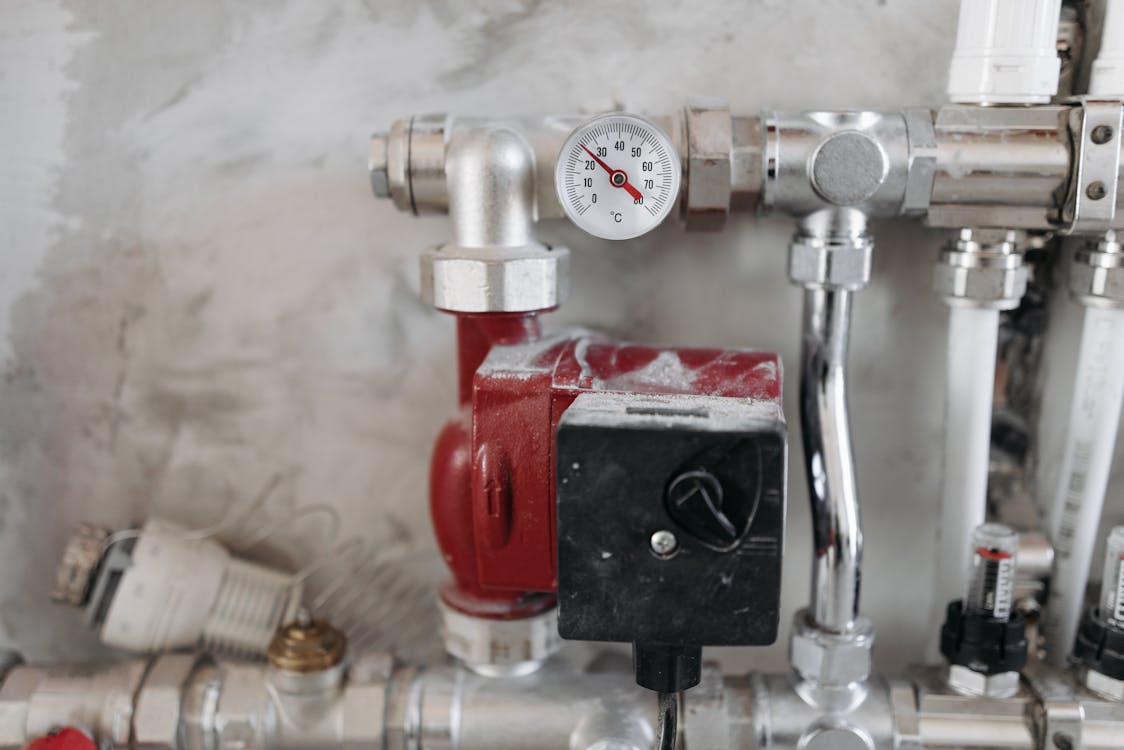
The installer checks whether an older home's panel can support one first.
Manufactured-home heaters
In a manufactured home, the heater usually sits in a small closet, often reached through an access panel on an outside wall. Space is tight, and replacements generally need a heater designed for manufactured housing, which suits the compartment and its connection layout; a standard store-bought heater usually isn't the right fit. Floors near the heater are often built from materials that suffer quickly when wet, so a leak does more harm than on a block home's slab. A drain pan with a working outlet and a leak detector are worth having. Many faults, such as elements and thermostats, can be repaired just as on any electric heater. Mention the manufactured home when you call, so the technician brings a suitable model if the tank turns out to need replacing. More on manufactured home water heaters.
Carport closets and exterior compartments
Whether it's a carport closet on a block home or an exterior compartment on a manufactured home, a heater with a door to the outside faces more humidity than one indoors. Connectors, valves and nipples corrode faster, and doors swell and let in rain and debris. A slow weep from a crusted fitting can leave a mineral trail down the tank that looks like the tank itself failing, when a new connector would solve it. A look at the connections every few months catches crust or dampness early; keeping the space clear of storage makes the heater easier to inspect and quicker to reach. At replacement, the installer checks that the enclosure still protects the heater, that the door closes properly and that the relief valve discharges somewhere harmless rather than onto the carport floor or under the home.
Common electric faults
A heater that gives no hot water at all usually has a failed upper element, a bad thermostat or a tripped high-limit cutoff. A tank that empties quickly of hot water often has a worn lower element. Lukewarm water can mean a thermostat set low or a broken dip tube, and water suddenly far too hot points to a thermostat stuck on, which deserves a same-day call. A breaker that trips points to a shorted element or a damp, overheated connection and should be reported rather than reset. None of this is a do-it-yourself job; the wiring is live, so report the symptom and leave the diagnosis to the pro. Details are in electric water heater repair.

Water heater services in Pinellas Park
- Manufactured Home Water Heaters
- Rusty or Discolored Hot Water
- Electric Water Heater Repair
- Leaking Water Heater
- Tankless Water Heater Installation
Tell us the community, your lot number and where the heater sits.
Pinellas Park water heater questions
Why does a leak do more damage in a manufactured home?
The flooring around a manufactured-home heater is often a material that swells and weakens once it gets wet, and a compartment behind a closed panel hides a slow drip for weeks. Catching water early with a pan that drains outside and a floor alarm saves the most trouble.
Is it all right for a heater to live in a carport closet?
Plenty of Pinellas Park heaters do. The trade-off is damp air on the valves and connectors, which then corrode sooner, and a door that has to keep rain off the tank. When the heater is replaced, the installer looks at the closet itself as well as the connections.
The breaker for our heater keeps tripping. What's behind that?
Most often an element has shorted, though a scorched connection or damaged cable can do the same. The breaker is protecting the circuit, so switching it back on again and again only hides the problem. Tell us when it trips, and a technician will find the cause and quote the fix.
We can't find the heater in our manufactured home. Where is it usually?
Look along the outside walls for a small hinged or screwed panel; many heaters sit in a compartment behind one. Others are in a narrow closet off a bedroom, bathroom or laundry area. Once you've found it, a photo of the label helps the technician bring the right model.
The floor under the heater is wet but the tank seems dry. How can that be?
Water can run down from a weeping fitting or valve on top, drip from the relief valve's pipe, seep past the drain valve or even condense on a cold surface. Tracing it is quick work for a technician, and several of those causes are simple repairs rather than a new heater.
How do we know our heater is nearing the end?
Watch for brown hot water while the cold stays clear, louder popping as it heats, rust or damp at the base, crusted fittings and showers that run cool sooner than before. Water seeping from the tank's body or bottom seam is the one sign that means replacing it straight away.
Our 1950s house still has galvanized pipes near the heater. Should they be changed?
The few feet of pipe and the fittings joined to the heater are the part worth doing now, while the water is already off for a replacement; that's where rust and slow leaks usually start. Replacing galvanized piping through the rest of the house is a bigger job to weigh separately.
Where does Pinellas Park's water come from, and does it matter for the heater?
The city buys its water from Pinellas County Utilities, which draws on Tampa Bay Water's regional blend. Minerals and fine sediment still settle in tanks over the years, so flushing and an anode check remain worthwhile, especially on heaters that have never been serviced.
Nearby communities
We also cover St. Petersburg, Seminole, Largo and the rest of Tampa Bay.
Pinellas Park water heater replacement?
Call any time for a local pro who works on Pinellas Park's block homes and manufactured homes.
Carport closets, compartments and laundry rooms.