
Heat pump · A good match for Florida air
Heat Pump Water Heater Installation Services in Florida
A heat pump water heater works by pulling warmth out of the air around it, and few places have as much warm, humid air as Florida. For many homes with a garage, it's the natural next heater. For some spaces it isn't, and it's worth knowing which before you commit.
Tell us where your current heater sits and roughly how big the space is.
How a heat pump water heater works
A conventional electric water heater makes heat directly, by passing current through its elements. A heat pump water heater moves heat instead. A small fan draws room air across a coil containing refrigerant, the refrigerant absorbs warmth from the air, a compressor concentrates that heat, and it's transferred into the water in the tank. The same principle runs an air conditioner, just pointed the other way.
Moving heat takes far less electricity than making it, which is where the efficiency comes from. Most units sold for homes are hybrids: they have the heat pump on top and ordinary electric elements inside the tank as backup, so they can still heat water quickly when demand is high.
Why Florida suits them
Heat pump units perform best when the air around them is warm. In colder climates they often sit in rooms that stay cool for months, and they struggle. Florida's garages, by contrast, are warm for most of the year, and that warmth is exactly what the unit uses.
There's a second benefit. As it pulls heat from the air, the unit cools and dries that air. In a humid Florida garage, a little cooler and noticeably drier is welcome, and it can help with the musty feel that garages get in summer. The water that comes out of the air has to go somewhere, which brings us to drainage.
Where a heat pump unit fits, and where it doesn't
- Garages. The best fit in most single-family homes: plenty of air, warm most of the year, somewhere to drain condensate and room for a taller unit.
- Large laundry or utility rooms. Can work if the room is big enough or open to the house, and noise is acceptable.
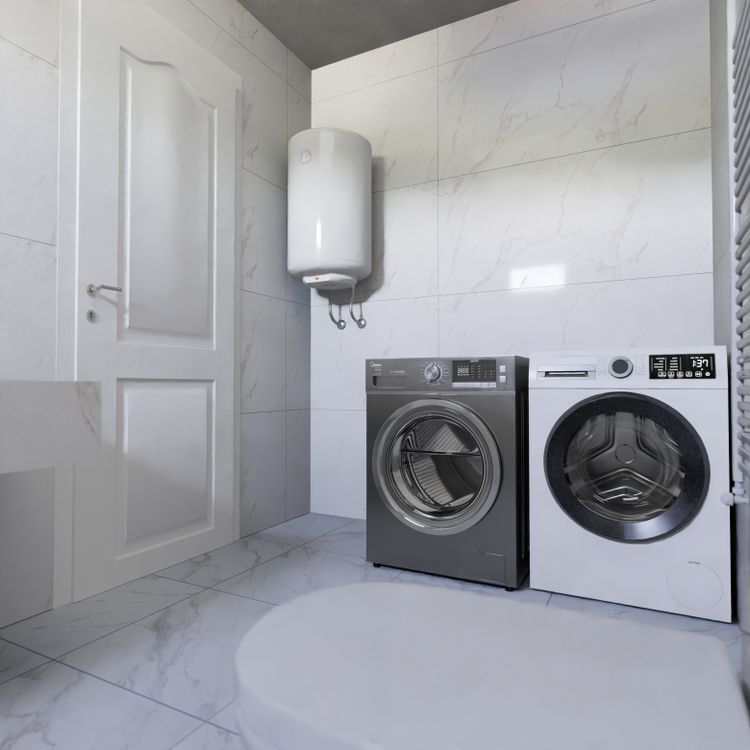
- Small interior closets. Usually difficult. A closed closet runs out of warm air quickly and the unit cools it down, which hurts performance. Louvered doors or ducting can make it work in some cases.
- Condo closets. Rarely a good fit, for the same reasons, plus limited drainage options and building considerations. See condo replacement.
- Manufactured-home compartments. Generally too small and enclosed. The installer confirms what suits your home.
Manufacturers specify how much surrounding space or airflow their units need. The installer checks your space against the model you're considering before recommending it.
Condensate: where the water goes
Because the unit dries the air, it produces water, and in Florida's humidity that can be a steady trickle. It has to drain somewhere suitable: a nearby floor drain, a line to the outside, or, where neither is available, a small condensate pump that lifts the water to a drain. A condensate line that clogs or isn't routed properly ends up as water on the floor, which looks like a leak but isn't. In the warm, damp conditions that suit these units, drain lines can also grow algae over time, so the line is worth keeping an eye on.
Noise and cooler air
A heat pump unit has a fan and a compressor, and you'll hear them when it runs, somewhat like a window air conditioner or a dehumidifier. In a garage, few people notice. Next to a bedroom or a home office, some do. The unit also exhausts cooler air, which is pleasant in a Florida garage and less welcome in a small room that's already air-conditioned. Neither is a problem once you know to expect it, and both are reasons the garage is the usual choice.
A quick description of the space tells the installer a lot.
The electrical side
Most heat pump water heaters sold for homes run on a circuit similar to the one feeding a standard electric tank, which is part of why swapping from one to the other is often straightforward. That isn't universal, and the installer checks the existing circuit, breaker and wiring against the unit's requirements before recommending it. If anything needs changing, it's included in the price you're given.
Operating modes and recovery
Hybrid units usually offer several modes. An efficiency or heat-pump-only mode uses just the heat pump, which saves the most electricity but heats more slowly. A hybrid mode uses the heat pump most of the time and brings in the elements when demand is high. An electric mode runs like a standard tank. Many also have a vacation setting for homes that will sit empty.
Because the heat pump heats water more slowly than elements, recovery after heavy use takes longer in efficiency mode. Households with back-to-back showers sometimes choose a slightly larger tank, or run hybrid mode, to avoid running short. The installer can talk through sizing with you, and the sizing guide explains the basics.
A note for North Florida and the Panhandle
Heat pump units work well across the state, but North Florida and the Panhandle have a genuine cool season. On colder winter days, a garage there can be chilly, and the unit will lean on its backup elements more often, so winter savings are smaller than summer ones. It's still a sensible choice for many homes; it's just worth knowing that the unit's behavior changes with the season.
Looking after a heat pump unit
Heat pump units need a little more attention than a plain electric tank. Most have an air filter that should be cleaned periodically, and in a dusty garage that matters more. The condensate line needs to stay clear. And the tank itself still benefits from the same care as any other: periodic flushing where the water is hard, and an anode rod check. The heat pump repair page covers what happens when these are neglected.
A word on incentives
Programs that encourage efficient water heaters come and go, and their terms change. We don't describe any here, and we don't have a relationship with any program sponsor. If you're interested, check what's currently offered directly with the organization that runs it before you buy.
What installation day involves
The installer isolates and drains the old heater, disconnects it and takes it out. The new unit is set in place, typically in a drain pan, and connected to the water lines. The relief valve discharge is routed, and the condensate line is run to a floor drain, outside or a condensate pump. The electrical connection is made to the unit's requirements.
As with any tank, it's filled completely and purged of air before power is turned on. The installer then starts the unit, sets the mode and temperature, checks that the fan and compressor are running and that condensate drains, and shows you the controls and the filter. The old heater goes with them.
What affects the cost
- The unit. Heat pump heaters cost more to buy than standard electric tanks; capacity and model matter too.
- Condensate drainage. A nearby drain is simple; a pump or a long line adds cost.
- Electrical changes. Usually minimal, but any circuit work is included.
- Location changes. Moving the heater from a closet to the garage adds pipe and electrical runs.
- Space adjustments. Louvered doors or ducting, where needed.
You'll get the full price before anything is disconnected, with any added charges explained first.
Get the full installed price, drainage and electrical included.
How long it takes
Swapping a garage electric tank for a heat pump unit is often done in a single visit, particularly with a floor drain close by. Relocations, condensate pumps and electrical changes extend it. Specific models may need ordering. After installation, the first tank heats more slowly than a standard heater in efficiency mode, so the installer may run it in hybrid mode at first.
Heat pump installation questions
How does a heat pump water heater save energy?
It moves heat from the surrounding air into the water rather than making heat with electric elements. Moving heat takes much less electricity than creating it. Most home units are hybrids, with backup elements for heavy demand, so they can switch between efficient heat pump operation and faster electric heating as needed.
Why are heat pump water heaters recommended for Florida?
Because they perform best in warm air, and Florida garages are warm for most of the year. They also dehumidify the space around them, which helps in humid garages. In colder climates they often sit in chilly rooms and struggle; here the conditions work in their favor.
How much space does a heat pump water heater need?
It depends on the model. Manufacturers specify a minimum amount of surrounding space or airflow, and units are usually taller than standard tanks. A garage generally has plenty. A closet may need louvered doors or ducting. The installer measures your space against the specific model before recommending it.
Where does the condensate from a heat pump unit go?
Into a floor drain, through a line to the outside, or into a small condensate pump that lifts it to a drain. In Florida's humidity the unit can produce a steady flow, so the drain route matters. A blocked or badly routed line ends up as water on the floor.
Are heat pump water heaters noisy?
They make a sound similar to a window air conditioner or dehumidifier when running, from the fan and compressor. In a garage, most people don't notice. Next to a bedroom or office, some find it noticeable. That's one reason installers usually recommend garages over indoor rooms.
Will a heat pump water heater cool down my garage?
A little, and it will dry the air too. The unit takes heat and moisture from the air around it and exhausts cooler, drier air. In a warm, humid Florida garage, most owners see that as a benefit. In a small indoor room, it can make the space cooler than you'd like.
Can I use my existing electrical circuit?
Often, since many home heat pump units run on a circuit similar to a standard electric tank. It isn't guaranteed, though. The installer checks the existing circuit, breaker and wiring against the unit's requirements and includes any changes in the price before starting.
Does a heat pump water heater work in North Florida winters?
Yes, but it relies more on its backup elements on cold days, because there's less warmth in a chilly garage to draw from. Savings are smaller in winter than summer. Across the year it still works well for many North Florida and Panhandle homes.
What maintenance does a heat pump water heater need in Heat Pump Water Heater Installation?
Clean the air filter periodically, keep the condensate line clear and give the tank the usual care: flushing where water is hard and an anode rod check. A technician can do this as part of a service visit. Neglected filters and drain lines are among the most common causes of problems.
How long does a heat pump water heater installation take?
A straight swap from an electric tank in a roomy garage is often done in a single visit, with time for the new unit to fill and start heating. If a new circuit, a condensate line to a distant drain or changes to the space are needed, it can take longer. The installer gives you a timeframe with the price.
Thinking about a heat pump unit?
Call and we'll connect you with a local installer who can check your space, drainage and electrical supply and price the switch.
Garage installs are usually the simplest.