
Loxahatchee · Palm Beach County
Water Heater Repair and Replacement in Loxahatchee, FL
A few miles south in Wellington, most homes take their water from a public supply. Out on Loxahatchee's acre lots, many homes draw from their own well instead, and that changes what a water heater lives with, from minerals and sediment to the rotten-egg smell that well owners know well. Repair or replacement, Loxahatchee callers are connected with a local pro.
The whole 33470 ZIP code, from Loxahatchee Groves to the acreage lots and the western subdivisions.
Start with the sniff test
Fill one glass from a cold tap and another from a hot tap, step away from the sink and smell each in turn. If only the hot water smells of rotten eggs, the source is almost certainly inside the water heater. If both smell, the water is carrying the odor before it reaches the heater, which on a well points to the well itself and is a matter for a water treatment specialist rather than a heater technician. If the smell comes and goes, note when: first thing in the morning, after a trip away, or only from one bathroom. Those details help the technician narrow down the cause before the visit. A smell that appears only after a new heater or a new anode goes in is worth mentioning too, since the anode's metal makes a difference. Related: rotten-egg smell in hot water.
What causes it inside the tank
A hot-only smell is commonly associated with a reaction inside the tank. Sulfate in the water, together with bacteria that thrive in a warm tank, reacts with the anode rod, the metal rod that corrodes slowly so the steel tank doesn't. The reaction produces hydrogen sulfide, the gas behind the smell. It's strongest after water has stood in the tank, and it's more common on well water than on treated public supplies. A technician confirms the cause on site and usually replaces the anode with a less reactive type, such as aluminum-zinc, or with a powered anode that isn't consumed, often alongside a flush. On a well with a softener, the choice of anode matters even more, because softened water wears some anodes faster. Removing the anode altogether is never the answer, because the tank then rusts through far sooner. Learn more about anode rod replacement.
Water heater repair and replacement in Loxahatchee
The name comes from Seminole words usually translated as "river of turtles". In 1902 the Southern States Land and Timber Company bought a vast tract of land that included the area, and settlement began in earnest after the West Palm Beach Canal, linking Lake Okeechobee to West Palm Beach, was finished in 1917. Loxahatchee Groves, settled from that year, became a town on November 1, 2006. To the east lies the Acreage, laid out as the Royal Palm Beach Colony, where the Indian Trail Improvement District, created in 1957, manages the canals and roads. Much of the area remains unincorporated. The community, ZIP 33470, has roughly 26,600 residents.
Most homes are recent. Census data show about 44% of homes in the 1990s and 31% in the 2000s, with 13% from the 1980s, 9% from the 1970s and only around 3% older. Nearly all are single-family houses on large lots, with the heater in an attached garage, often on a stand beside the laundry; some older homes keep it in a utility room. You'll find an electric tank in almost every home.
Census data counts only about 1% of homes as seasonal, so almost every heater here runs year-round. Much of the area runs on private wells and septic systems rather than public utilities.
On a well, the heater takes in groundwater with its minerals, iron and sulfate, and the pump and pressure tank add pressure swings that a public supply doesn't. That's why the smell, sediment and relief valve questions come up so often here, and why replacement is a good moment to choose an anode, a filter and a size that suit well water. Iron in some wells also stains fixtures and can turn hot and cold water alike a rusty color, which the cold-and-hot side-by-side test helps sort out.
Service in Loxahatchee covers ZIP code 33470.
Expansion, pressure and the relief valve
Water expands as it heats. On a public supply with a backflow preventer or check valve, that extra volume has nowhere to go, so pressure climbs each time the heater runs, and the relief valve may drip to let it out. An expansion tank on the cold line absorbs it. A well system has its own pressure tank and a pump that cycles between set pressures, so a dripping relief valve there can come from the pump's settings, a waterlogged pressure tank, a check valve, the heater's temperature setting or a worn valve. The technician checks the pressure and finds which is at work. Where the well has a check valve that traps heated water in the house, an expansion tank helps here too. Never cap or plug the relief valve: it's the heater's last line of protection. Details are in expansion tank installation.
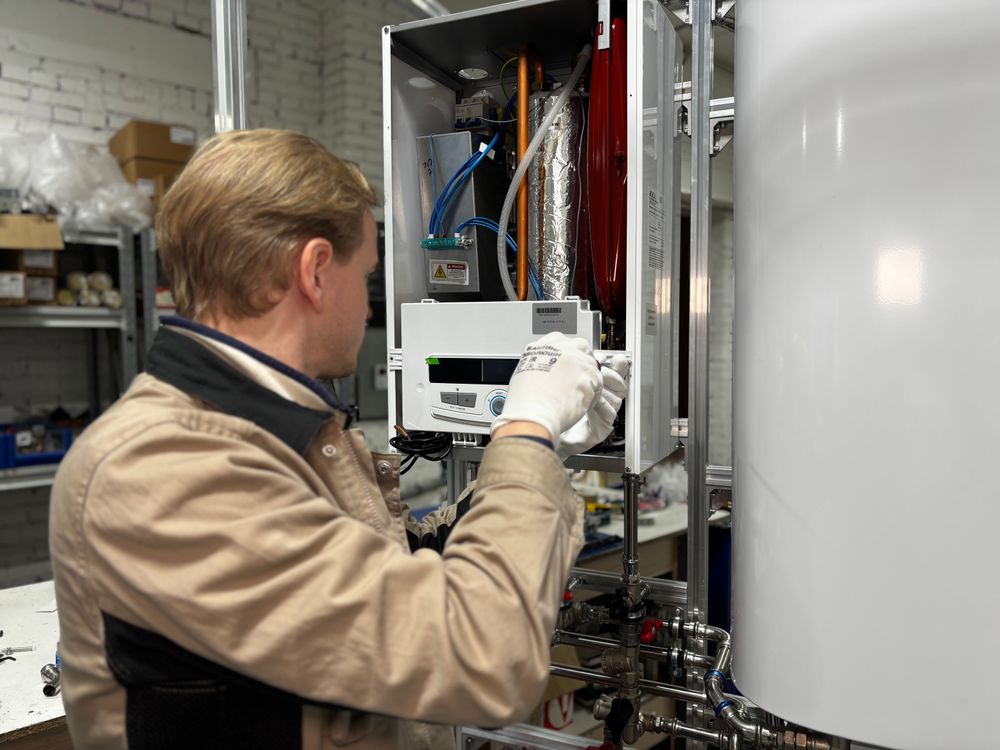
Hot water smelling of eggs? A pro can check the anode and suggest one that suits well water.
Sizing the new heater
Size a replacement for your busiest hour of hot water, not the number of bedrooms. Picture the morning rush: how many showers run back to back, whether anyone fills a large tub, and whether the washer or dishwasher runs at the same time. Then compare first-hour ratings, the label figure for how much hot water a tank can supply in one busy hour from a full start. A tank that reheats quickly can outperform a bigger one that reheats slowly. On a well, sediment that settles in the new tank will slowly take up space too, so a flushing routine from the start keeps the rating closer to what's on the label. If the old heater ran short only on busy mornings and tests sound, going up a size, or choosing a tank with faster recovery, is worth considering at replacement. Learn more about water heater sizing guide.
Tank or tankless on well water
A tankless heater saves floor space and never runs out mid-shower if it's sized for your flow. Against that, a whole-house electric tankless unit needs a substantial electrical supply that many panels can't provide without an upgrade. On mineral-bearing well water, scale builds in its heat exchanger, so it needs regular descaling, and a sediment filter or softener ahead of it helps. A standard tank is simpler to install and tolerates sediment better, and a heat pump tank suits a roomy, warm garage. The installer prices the options and explains the upkeep of each, so the choice isn't made on purchase price alone. On a large lot with a long pipe run from the garage to a far bathroom, the wait for hot water at a far tap is long with either type, and a little longer with tankless. Details are in tankless water heater installation.

Water heater services in Loxahatchee
- Rotten-Egg Smell in Hot Water
- Anode Rod Replacement
- Expansion Tank Installation
- Water Heater Sizing Guide
- Tankless Water Heater Installation
- Rusty or Discolored Hot Water
Run the cold beside the hot and tell us which one is discolored; a pro will explain what it means.
Loxahatchee water heater questions
In Loxahatchee, what maintenance does a heat pump water heater need?
The same care as any tank, including periodic flushing and an anode check, which matter more on well water, plus two simple extras: rinsing the air filter and keeping the condensate line clear. The installer shows you both when the unit goes in.
In Loxahatchee, how does a heat pump water heater work?
A fan moves garage air across a coil, and a small heat pump carries the warmth from that air into the tank. Because it moves heat instead of making it, it uses far less electricity than elements alone, which stay on hand as backup.
In Loxahatchee, is my garage suitable for a heat pump water heater?
Most attached garages here are, provided there's air around the unit, a place for condensate to drain, room for its extra height and a suitable circuit. The installer checks all four and prices it against a standard tank before you decide.
In Loxahatchee, what size water heater do we need?
It depends on your busiest hour, not the bedroom count: showers back to back, any large tub, and appliances running at the same time. The installer matches that routine to a heater's first-hour rating and the space in your garage.
In Loxahatchee, does a water softener help the water heater?
A softener removes much of the hardness that forms scale and sediment, so flushing and descaling may be needed less often. Softened water tends to wear the anode faster, though, so it still needs checking. A technician can advise on both at a service visit.
In Loxahatchee, why is the hot water cloudy or milky?
Usually it's tiny air bubbles, which clear from the bottom of the glass up within a minute. If grit settles instead, it may be sediment from the tank or sand from the well. A technician can flush the tank and check the dip tube if particles keep appearing.
Both our hot and cold water smell. Is that the heater?
Probably not. When the cold smells too, the odor is coming in with the water, which on a well usually points to the well or its treatment equipment. A water treatment specialist is the right call for that; the heater technician helps when only the hot side smells.
Do you cover Loxahatchee Groves and the Acreage?
Yes. We cover the whole 33470 ZIP code, from Loxahatchee Groves and the acreage lots to the subdivisions along Southern Boulevard and Okeechobee Boulevard. Give us your address and directions from the main road on the call, and we'll match you with a nearby pro.
Nearby communities
We also cover Wellington, West Palm Beach, Palm Beach Gardens and the rest of the Southeast Coast.
Loxahatchee water heater replacement?
Call any time for a local pro who replaces heaters on Loxahatchee's well-water homes.
Garages and utility rooms across the acre lots.