
Wimauma · Hillsborough County
Water Heater Repair and Replacement in Wimauma, FL
Every autumn, owners of winter homes around Wimauma come back to a heater that has stood idle since spring, while their year-round neighbors' heaters have worked straight through. Either way, a little care at the right time of year keeps a tank going longer, and here's what that looks like. Whether the heater needs repair or replacement, we connect you with a local pro in Wimauma.
Town, subdivisions and rural lots across 33598.
Water heater repair and replacement in Wimauma
Wimauma was founded in 1902 by Captain C. H. Davis, a railroad contractor who had just built the Seaboard Air Line's Florida West Shore line from Turkey Creek, near Plant City, to Bradenton. The settlement grew around a stop near the midpoint of the line, and Davis named it by combining the first letters of his daughters' names: Wilma, Maude and Mary. For a time it was one of Hillsborough County's incorporated towns, from 1925 until the 1930s, when its local government ceased. Today it's unincorporated, and its ZIP code, 33598, is home to about 13,700 people in the southeastern part of the county.
Census figures show steady growth rather than one boom: about 23% of homes from the 1980s, 24% from the 1990s, 24% from the 2000s and 5% since, with 12% from the 1970s and a small share older. The housing is mixed. There are manufactured homes, many on rural lots or in communities with metal carports and screened rooms, where the heater sits in a compartment or closet; older frame and block houses near the old town center; and newer single-family subdivisions with the heater in an attached garage. Nearly every heater is electric, and some rural homes use propane.
Water is mixed too. Newer subdivisions are generally on Hillsborough County's public supply, while many rural homes draw from private wells, with the hardness, sediment, iron and sulfur that can bring. About 5% of homes are held for seasonal or occasional use, according to Census data, so some heaters stand idle through the summer while others work every day. Because homes went up steadily over four decades, heater ages vary widely from one lot to the next, and many older homes are on their third or fourth heater, often joined to valves and fittings from earlier installations.
We connect callers in Wimauma with local water heater pros across ZIP code 33598.
A year of care for a Wimauma heater
Every few months: look and listen. Check the floor, pan or compartment for moisture, the fittings on top for green or white crust, and the base for rust. Listen as it heats: new popping or rumbling means sediment is building.
Once a year: flush. A technician runs water through the tank and out of the drain valve to carry loose sediment away. Started early and repeated, it keeps the lower element clear and the tank at full capacity. On a well, sediment builds faster, so the flush matters more.
Every few years: the anode. The anode rod corrodes so the tank doesn't. Well water and softened water can both wear it faster, and replacing it before it's spent adds years to a sound tank. A new, less reactive anode can also cure a sulfur smell. The technician inspects it during the annual flush, so there's no need for a separate visit.
In spring and autumn: the seasonal check. For homes that stand empty in summer, shut the supply off on the way out and look the heater over on the way back in. For year-round homes, the start of the cool season is a sensible moment for a quick check, before the colder water and busier mornings put the heater under more strain. More on flushing and maintenance.
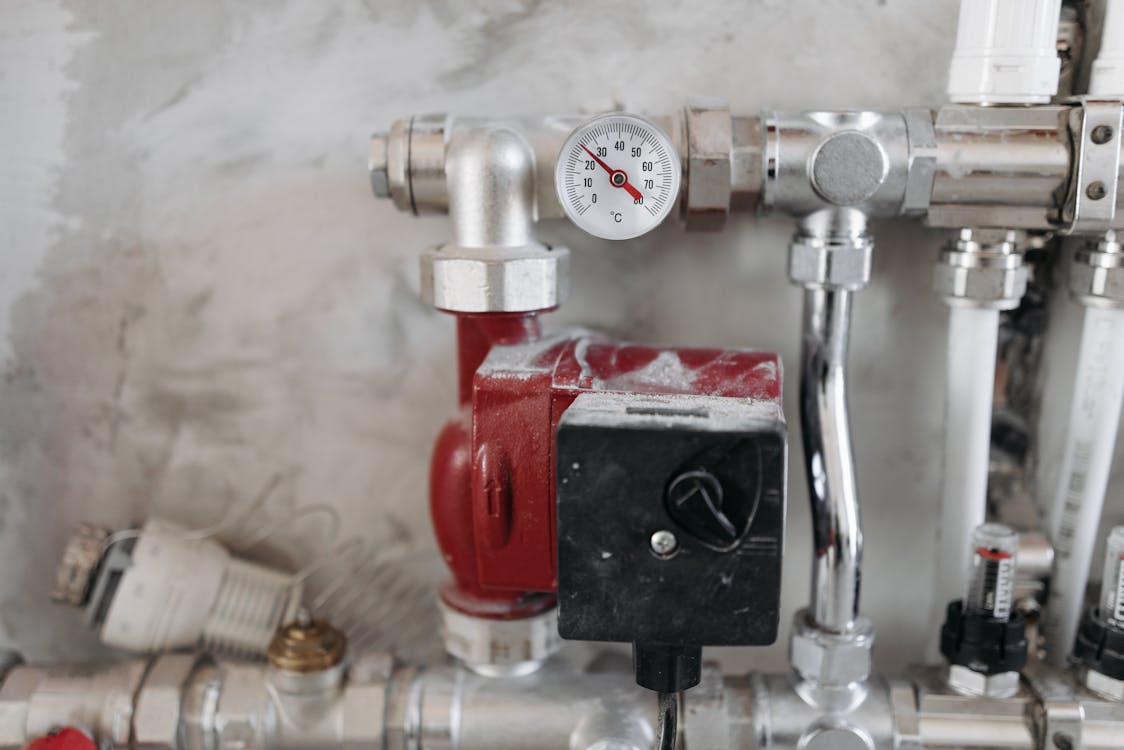
Turn off the water feeding the tank and stay clear of its wiring, then phone us.
Leak alerts and automatic shutoffs
Most heater leaks start small: a weep at the bottom seam, a drip from a connector, a relief valve releasing a little water each cycle. In a compartment nobody opens or a home empty for the summer, that can run for days. A drain pan catches the first water, but only helps if its outlet is piped somewhere that can take it. A leak detector on the floor sounds an alarm when its sensor gets wet, and connected models alert your phone wherever you are. An automatic shutoff valve goes further, closing the supply by itself. In a manufactured home, where floors suffer quickly when wet, a detector and pan are especially worthwhile. More on drain pan and overflow protection.
When care stops being worth it
Flushing can't reverse years of neglect. After a long time without it, sediment hardens into a crust that water won't shift, and a flush may clog the drain valve without achieving much. Maintenance can't undo rust already under way inside the tank either. Water from the tank body or bottom seam means the steel has failed; no repair fixes that. On a heater in its first several years, repairing an element or valve almost always makes sense. On one well into its second decade, especially on a well, the tank behind the repair is ageing, and a planned replacement is usually the better value. The technician prices both on the same visit, so you can compare them directly. Replacing on your own schedule also avoids an after-hours call and gives you time to choose the size and type, including a heat pump unit if your garage suits one, or a model designed for a manufactured home's compartment.
Leaving for the season
If you spend the summer elsewhere, shut off the water supply to the heater or the whole home before you go, so a failed fitting can't feed a leak for months. Use the heater's vacation setting if it has one, or ask a technician how best to leave it. Test the leak detector and give a neighbor or the community office a key and your number. On your return, make sure the supply is back on and the tank full before the heater runs, and watch the floor for a few days. More on seasonal home water heater shutoff.
A sulfur smell from the hot taps
Hot water that smells of rotten eggs while the cold is fine is commonly associated with sulfate in the water reacting with the anode rod in the warm tank. It's familiar on wells and after a heater has stood unused for weeks or months. A technician confirms the cause on site and usually fits a less reactive or powered anode. If both hot and cold smell, the cause lies in the well itself. Removing the anode is never the answer, because the tank loses its protection against rust and fails sooner. Related: rotten-egg smell in hot water.

Water heater services in Wimauma
- Flushing and Maintenance
- Drain Pan and Overflow Protection
- Seasonal Home Shutoff
- Rotten-Egg Smell in Hot Water
- Anode Rod Replacement
- Manufactured Home Water Heaters
For a garage in one of the newer subdivisions, ask whether one would suit.
Nearby communities
We also cover Sun City Center, Ruskin, Riverview and the rest of Tampa Bay.
Wimauma water heater questions
Can a neighbor or the park office check on the heater while we're away?
That works well. Show them where the heater and the main shutoff are, and leave your number. A connected leak detector that alerts both of you means a drip is caught between their visits rather than weeks later, when the floor may already be damaged.
What kinds of water heaters do you see most around Wimauma?
Mostly electric tanks: in the compartments and closets of manufactured homes, the utility rooms of older houses and the garages of the newer subdivisions. Some homes use propane, and heat pump units are increasingly chosen at replacement for roomy garages.
For a Wimauma home, why does the hot water smell after the house has been empty?
Water that sits in a warm tank for weeks gives the smell-causing reaction time to build. Letting the hot taps run a while usually flushes it out. If it keeps returning, especially on a well, a technician can confirm the cause and fit a less reactive anode rod.
In Wimauma, what does an automatic shutoff valve do?
It closes the water supply by itself when a sensor detects a leak, stopping the water at its source rather than just sounding an alarm. For a home empty for the summer, or a manufactured home where floors suffer quickly when wet, it's well worth having.
Is our garage suitable for a heat pump water heater?
Most attached garages in the newer subdivisions are, provided there's enough air around the unit, a route for condensate, room for its extra height and a suitable circuit. A manufactured home's compartment isn't suitable. The installer checks the space before recommending one and prices a standard tank alongside.
For a Wimauma home, should we put a sediment filter on our well?
If the well brings sand or silt, a whole-house sediment filter, kept serviced, reduces what settles in the heater and in fixtures. Whether you need one depends on the well. Iron and sulfur are separate questions for a water treatment specialist, who can test the well.
Our manufactured home near Wimauma is on a well. How often should the heater be flushed?
Usually once a year, more often if a lot of sediment comes out each time. Well water carries more minerals than treated county water, and flushing early and regularly keeps the lower element clear. Ask the technician for an anode check at the same visit.
Do you cover the rural roads around Wimauma?
Yes. We cover all of 33598, from the old town center to the subdivisions, manufactured-home communities and rural lots. Give us your address, or the community and lot number, on the call, and we'll match you with a nearby pro.
Wimauma water heater repair?
Call any time for a local pro who repairs and replaces heaters across Wimauma.
Compartments, utility rooms and garages.