
Oldsmar · Pinellas County
Water Heater Repair and Replacement in Oldsmar, FL
Oldsmar sits at the very top of Old Tampa Bay, where the water narrows between the Pinellas and Hillsborough shores. That puts much of the city within reach of salt-laden breezes, which settle on the fittings above garage heaters, while minerals in the water settle inside the tank. Both show up sooner or later as a repair. For repair or replacement in Oldsmar, call and we'll connect you with a local pro.
Bayside streets and the subdivisions of 34677, day or night.
What minerals do inside a tank
Much of the water in the Tampa Bay area passes through limestone on its way to the tap, picking up dissolved minerals. When that water is heated, some of the minerals come out of solution and settle on the bottom of the tank as sediment, a gritty layer that grows year by year. It does three kinds of harm. It insulates the bottom of the tank, so water trapped beneath boils and pops as the heater runs. It buries the lower element, which runs hotter and fails sooner. And it takes up space, so a tank that once held plenty now runs out early. How quickly this happens depends on the water supply, the temperature setting and how hard the heater works; an ageing tank that has never been flushed usually has a thick layer. See noisy water heater and sediment.
Water heater repair and replacement in Oldsmar
On April 12, 1916, the automobile pioneer Ransom E. Olds, maker of the Oldsmobile and the REO, bought 37,541 acres at the north end of Old Tampa Bay to build a planned town. It was first called R. E. Olds-on-the-Bay and soon shortened to Oldsmar. Olds set up a company to lay out the town and hired planners and builders, and the site appealed to him partly because a rail line already ran through it. In 1927 the town was renamed Tampa Shores, and in 1937 it went back to Oldsmar. Today its single ZIP code, 34677, is home to about 20,800 people.
Most of the housing came much later than Olds's plan. Census figures put about 40% of homes in the 1980s and 27% in the 1990s, with 15% from the 1970s, 11% from the 2000s and around 5% older. Most are single-family houses in subdivisions, with the heater in an attached garage, alongside townhomes and some condos with the heater in a closet. Electric is the standard, with very few gas units. Just 4.9% of homes are used seasonally, per the Census, which means nearly all heaters work daily. Public water serves most homes.
With two-thirds of homes built in the 1980s and 1990s, a great many Oldsmar houses are on their second or third heater. Many of those heaters are connected by valves and fittings left from the first installation, and sit in garages close enough to the bay for salt to reach them.
Because so many subdivisions went up within a few years of each other, their heaters also tend to age in step, and a street can see several replacements in a single year. For repair calls, that usually means one of three things: a tank rumbling with years of sediment, a crusted fitting that has started to weep, or an element that has failed on a heater old enough to make replacement worth weighing.
Our Oldsmar coverage runs through ZIP code 34677.
What flushing can and can't do
A flush is when a technician drains water from the tank through its drain valve, carrying loose sediment out with it, and refills it. Done regularly from early in a heater's life, it keeps the layer thin, protects the lower element and helps the tank keep its full capacity. It's usually combined with a look at the anode rod, which wears faster when the water is working it hard. What a flush can't do is undo years of neglect. After a long time without one, sediment often hardens into a crust that water won't shift, and a flush on a tank like that may barely change the noise. It can't repair rust, either. On an older, rumbling tank, the flush is often the moment the technician suggests planning a replacement instead. Read more at water heater flushing and maintenance.
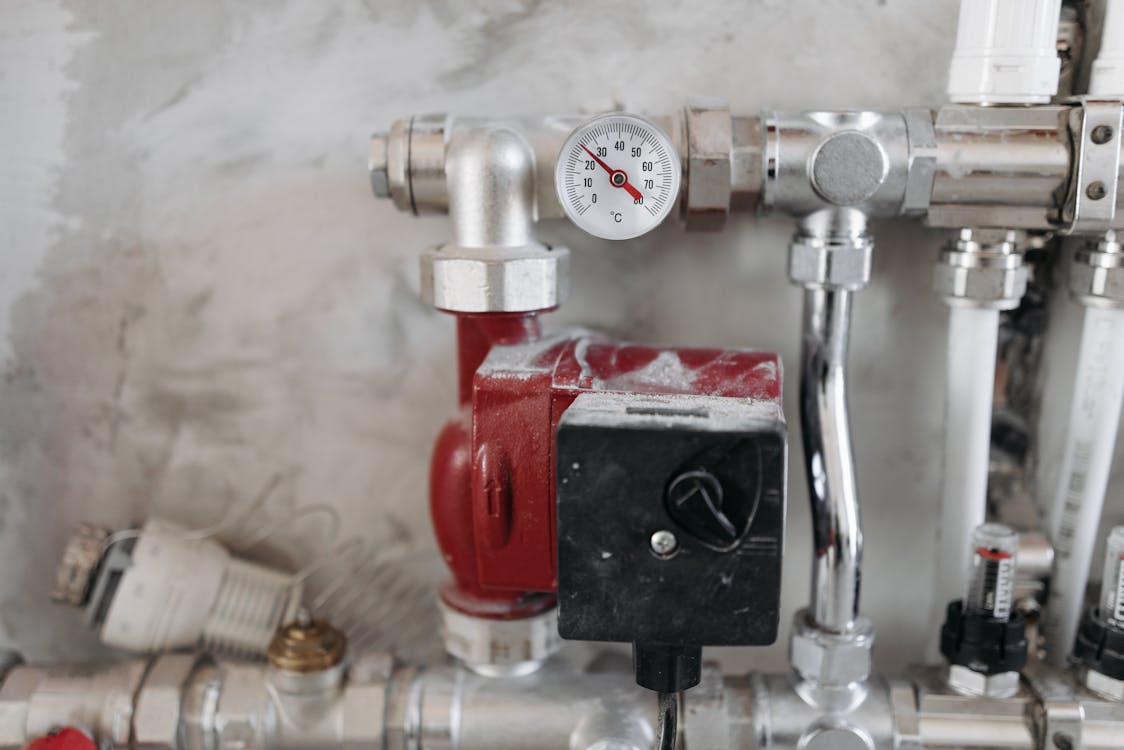
A worn anode is often why a tank rusts early; a pro can check yours with a flush.
Salt air at the top of the bay
Breezes off Old Tampa Bay carry fine salt that settles on metal in garages, especially those left open in the evening. On a water heater, brass valves and copper fittings grow a green or white crust, and braided connectors corrode at their crimped ends. Behind that crust, a joint can weep so slowly that the first sign is a mineral trail down the jacket, which can look like the tank itself failing. The relief valve and its discharge pipe corrode too. A look at the top of the heater every few months, and renewing crusted parts at any repair, stops most slow leaks before they reach the floor. A pan with a working outlet under the heater adds a second line of defence if one gets through. Related: leaking water heater.
Signs that mean call today
Some signs can't wait. Water seeping from the tank body or its bottom seam, a puddle that returns after you've mopped it, or rust streaks down the side of the tank mean it has failed or is about to. Close the cold supply, keep clear of the wiring and call. Others give you time to plan: rust around the fittings, brown hot water when the cold runs clear, louder rumbling, and hot water that runs short. On a heater in its second decade, two or more of those together usually mean it's time to arrange a replacement. Read the manufacture date on the label, or give the technician the serial number, to see where yours stands. A planned replacement lets you choose the size and type, and book a day that suits you, rather than taking whatever is available on the morning the tank gives out. Learn more about water heater replacement.
Electric faults
When nothing comes out hot, suspect the upper element, its thermostat or the high-limit cutoff. Hot water that runs out fast usually means the lower element has failed, often buried in sediment. Water much too hot means a thermostat stuck on, and a breaker that trips repeatedly points to a shorted element, to be reported rather than reset. The parts are enclosed beside live wiring. Describe what's happening and the technician will trace it. Repeated element failures on the same heater usually trace back to sediment, and a flush, or a new tank if the old one is past it, breaks the pattern. On a younger heater with a sound tank, most electric faults are fixed in a single visit. See electric water heater repair.

Water heater services in Oldsmar
- Flushing and Maintenance
- Noisy Water Heater and Sediment
- Leaking Water Heater
- Expansion Tank Installation
- Electric Water Heater Repair
- Water Heater Sizing Guide
A flush, a part or a new heater: you'll hear the price before the work begins.
Nearby communities
We also cover Safety Harbor, Palm Harbor, Dunedin and the rest of Tampa Bay.
Oldsmar water heater questions
For a Oldsmar home, we keep running out of hot water. Do we need a bigger heater?
Maybe, but have it checked first. Heavy sediment, a failed lower element or a broken dip tube can all make a properly sized heater act like a small one. If it tests fine and the household has grown, a larger tank or faster recovery is worth pricing.
For a Oldsmar home, do homes near the water need extra attention for their heaters?
A little. Salt air near the bay corrodes brass valves, connectors and the relief valve line faster than inland, especially in open garages. A glance at the top of the tank every few months, and renewing crusted parts at any service, keeps most slow leaks away.
In Oldsmar, what is an expansion tank, and do we need one?
It's a small tank on the cold supply with an air cushion inside that absorbs the extra volume water gains as it heats. Homes whose plumbing is a closed system often need one; a relief valve that drips after heating is a common clue. The technician checks your system.
For a Oldsmar home, what size water heater do we need?
It depends on your busiest hour of hot water use, not the size of the house. Count the showers that run back to back, any large tub, and appliances running at the same time. The installer compares first-hour ratings for the space you have.
For a Oldsmar home, why does the relief valve drip just after the heater runs?
Usually because pressure rises as the water heats in a closed plumbing system; an expansion tank normally cures it. A worn valve or a very high temperature setting can also cause a drip. Never cap it; have the cause found.
For a Oldsmar home, my home has an old solar water heater. Can it still be serviced?
Often, yes, though parts for older systems can take time to find. A technician familiar with solar can check the collectors, pump, controller and tank and tell you whether a repair is worthwhile or another type of heater makes more sense.
Our 1980s house is on its second heater, and it's rumbling. Will a flush help?
Possibly, if the sediment is still loose. If the heater has never been flushed and is well into its second decade, the layer may have hardened and a flush may not change much. The technician can tell you which it is before doing the work.
Do you cover the whole of Oldsmar?
Yes. We cover all of 34677, from the streets near the bay to the subdivisions and townhomes farther north. Give us your address when you ring, and we'll put you through to a local pro who works in north Pinellas and nearby.
Oldsmar water heater repair?
Call any time for a local pro who repairs and replaces heaters across Oldsmar's homes and townhomes.
Garages and closets at the top of Old Tampa Bay.