
Brooksville · Hernando County
Water Heater Repair and Replacement in Brooksville, FL
In most of Florida, a rotten-egg smell from the hot taps shows up after a house has stood empty for a while. Around Brooksville, where so many homes run on a private well, it can turn up in a house lived in every day. The good news is that the heater is usually the part that can be fixed. Whether the heater needs repair or replacement, we connect you with a local pro in Brooksville.
Downtown, the subdivisions and the wooded lots out in the county, across five ZIP codes.
A one-minute smell check
Fill a glass from a cold tap, then another from a hot tap, and smell each away from the sink. That simple comparison sorts most smells into one of three groups, and it's the first thing a technician will ask about.
The hot glass smells and the cold doesn't. The smell is forming in the heater, and the anode rod inside the tank is the usual cause. This is common on wells and fixable at the heater.
Both glasses smell. The gas is in the groundwater before it reaches the heater. That points to the well and a water treatment specialist; the heater may only be making the hot side stronger.
The smell comes and goes. Note when it happens: first thing in the morning, after a few days away, or after the well pump was worked on. That pattern helps the technician bring the right parts.
Where the smell comes from
Every standard tank has an anode rod, a length of metal that corrodes on purpose so the steel tank doesn't. Many wells carry sulfate, and in the warm, still water inside a tank a reaction involving the anode can produce hydrogen sulfide, the gas behind the smell. It's commonly associated with this mechanism rather than with the heater failing, and a technician confirms the cause on site. The usual cure is an aluminum-zinc or powered anode that doesn't react the same way, often with a flush. Pulling the anode out to stop the smell is never the fix, because the tank then rusts through years sooner. When a new heater is installed on a well, the right anode can go in from the start. More on anode rod replacement.
Water heater repair and replacement in Brooksville
Settlers arrived in the 1840s and formed two small communities here, Melendez and Pierceville. Brooksville was established in 1856 from the consolidation of the two, and it incorporated on October 13, 1880. It is the county seat of Hernando County, set in rolling country north of Tampa, and its old railroad depot now houses a museum. Five ZIP codes carry a Brooksville address, reaching far beyond the city into the surrounding county, and together they are home to about 64,200 people.
Most of the housing came after 1970. Per Census figures, about 28% of homes in the 2000s, 25% in the 1980s, 19% in the 1970s and 17% in the 1990s, with around 11% older. Manufactured homes make up a large share, many on wooded lots under tall pines, with the heater in an exterior compartment, a closet or a small outbuilding. Subdivisions from the 1980s onward keep it in the garage, and older houses in town have it in a utility room or on a porch. Nearly every heater here is electric.
Outside the city's water system, private wells are common, bringing hardness, iron, sediment and in many places sulfur into the tank. About 5.5% of homes are held for seasonal or occasional use, according to Census data, so most heaters work every day, and a failure is felt the same morning. Houses built together in the 1980s and 2000s subdivisions also tend to have heaters of a similar age, so replacements often come in clusters on the same street.
That makes Brooksville installation work a little different from the coast. The heater is often in a spot exposed to the weather, the water it heats is untreated, and the choice of anode and the plan for flushing matter as much as the size of the tank. Many homes are on their second or third heater, and the valves, connectors and pan around it often need renewing along with the tank itself.
Service in Brooksville covers ZIP codes 34601, 34602, 34604, 34613 and 34614.
What a well does inside the tank
Groundwater from a private well reaches the heater with everything it picked up underground: dissolved minerals, iron and sometimes fine sand. The minerals settle on the tank floor as sediment, the lower element ends up buried and runs hot, and the anode is used up faster than on treated water. You'll hear it as rumbling or popping when the heater runs, and notice it as hot water that runs out early. A technician can flush the tank to remove loose sediment and check the anode, and on a new installation it's worth starting both from year one. A sediment filter on the well line helps where the well brings sand. The pump and pressure tank matter too, since pressure swings can make the relief valve release water. Water treatment is its own specialism. See water heater flushing and maintenance.
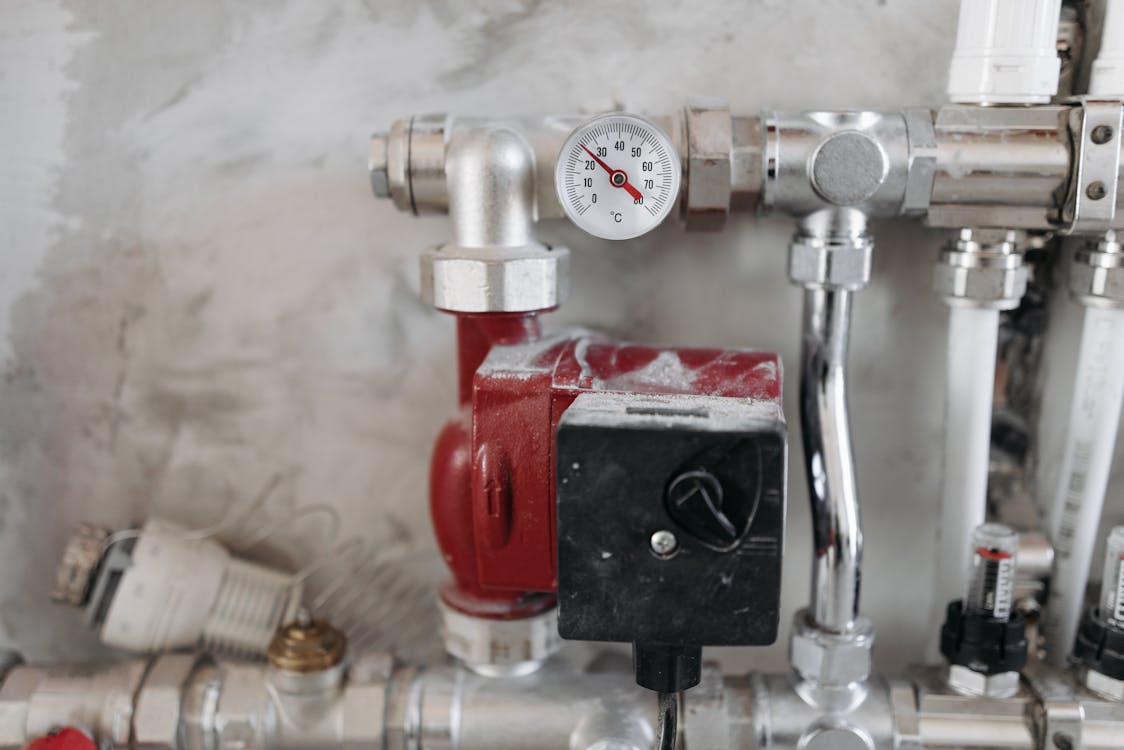
A new anode and flush, or a new heater: both priced so you can compare.
Heaters outside the living space
Around Brooksville, heaters often sit in an exterior compartment on a manufactured home, a closet built into a carport, a porch enclosure or a small shed beside the house. That keeps a leak out of the living space, but it exposes the heater to heat, humidity, insects and rain driven in under a door that no longer fits. Fittings on top corrode faster than indoors, and a slow weep can run unseen down the back of the tank. A missing or cracked pan leaves the slab or the floor to take any leak. At installation, the new heater can go in a pan with an outlet, with fresh valves and connectors, a door that closes properly and a discharge line that ends somewhere harmless. Related: leaking water heater.
Leak alerts for heaters out of sight
A heater in a shed or an outside compartment is the one nobody checks. A small leak detector on the floor beside it sounds an alarm when its sensor gets wet, and a connected model sends an alert to your phone, which is what makes it useful for a heater you rarely see. An automatic shutoff valve goes further and closes the supply by itself. Both are quick to add at installation, and they work best alongside a pan whose outlet actually drains somewhere. Make sure the alert goes to more than one phone, such as a family member or neighbor, so someone nearby can close the water if you're away. Test the detector now and then; a sensor that has been knocked out of place or run out of battery gives no warning. See drain pan and overflow protection.
Water heater services in Brooksville
- Water Heater Installation
- Rotten-Egg Smell in Hot Water
- Anode Rod Replacement
- Flushing and Maintenance
- Leaking Water Heater
- Drain Pan and Overflow Protection
- Solar Water Heater Service
Water under the heater? Close its cold valve, keep clear of wiring and ring us.
Brooksville water heater questions
For a Brooksville home, what happens to the old water heater?
The technician disconnects and drains it, then usually takes it away when they leave. Old tanks are generally taken for recycling or disposal as scrap metal. If removal isn't included in your quote, ask when you call so there are no surprises.
For a Brooksville home, can the technician work on any brand of water heater?
Local pros work on the common tank, tankless and heat pump brands, including models made for manufactured homes. For older or less common heaters, parts may need ordering, so read out the brand and model from the label when you call.
In Brooksville, should we keep our solar water heating system or replace it?
Look at what has failed and how old the system is. Collectors often outlast the pump, controller and tank, so a repair can keep it going, though parts for older systems may be scarce. A technician who knows solar can weigh up repair against a standard or heat pump heater.
In Brooksville, can a leaking tank be patched?
No. When the tank itself leaks, the steel inside has rusted through and there's no lasting fix. A leak from a fitting, the relief valve or the drain valve is different and can usually be repaired. The technician will tell you which it is.
For a Brooksville home, why does the hot water smell after the house has been empty?
Water standing in a warm tank for days can react with the anode rod, producing a rotten-egg smell on the hot side. A few minutes at the hot taps usually clears it. On a well, where it may happen more often, a different anode is the usual fix.
For a Brooksville home, is a hissing or sizzling sound a problem?
It can be. Sizzling from an electric heater often means water is dripping onto something hot, perhaps from a leaking fitting, or sediment is boiling around an element. Look for water around the heater, keep clear of the wiring and have it checked.
Our heater is in a shed next to the house. Can the new one go there too?
Usually. The installer checks the shed's floor, door and space, the route of the pipes and the relief valve's discharge line. A pan with an outlet and a leak detector are worth adding, since a heater out of sight is easy to forget.
Do you cover the rural parts of Brooksville's ZIP codes?
Yes. We cover all five Brooksville ZIP codes, from downtown to the subdivisions and the wooded lots far out in the county. Give us your address and directions from the nearest main road when you ring, and we'll put you through to a local pro.
Nearby communities
We also cover Spring Hill, Hudson, Dade City and the rest of Tampa Bay.
Brooksville water heater installation?
Call any time for a local pro who installs and repairs heaters across Brooksville, on wells and city water.
Compartments, sheds, porches and garages across Hernando County.