
Boynton Beach · Palm Beach County
Water Heater Repair and Replacement in Boynton Beach, FL
Water on the closet floor, a stain spreading across the ceiling below, or a garage that smells damp? In Boynton Beach, the first minutes matter more than anything else. Here's what to do, then what comes next. Whether the heater needs repair or replacement, we connect you with a local pro in Boynton Beach.
From Ocean Ridge to west Boynton, day and night.
The first minutes of a leak
Stop the water. Close the valve on the cold-water pipe entering the top of the heater. If it won't turn or you can't reach it, close the main shutoff for the house or unit; in many condos it's in the utility closet, under a sink or by the front door.
Protect people and belongings. Keep clear of the heater's electrical parts and any water pooled near them. Move rugs, boxes and anything else that can be damaged, and put towels at the closet door to slow the spread.
Tell the people who need to know. In a condo or townhome, that's the association or management office and the neighbors below; the office can reach units whose owners are away. In a rental, it's the landlord or property manager. If water has reached another unit, each owner contacts their own insurer.
Then call for the repair. Say where the water is coming from. A drip from a fitting on top, the relief valve or its pipe, or the drain valve is often a replaceable part. Water from the tank body or bottom seam means the tank has rusted through and needs replacing. If you're calling on behalf of an owner who is away, give us their name and the unit, and who will let the technician in. Related: leaking water heater.
Water heater repair and replacement in Boynton Beach
The Town of Boynton was platted in 1898 and named for Major Nathan Boynton, a Michigan Civil War veteran who built a beachfront hotel here in the 1890s; it was finally incorporated in 1920. Today its six mailing ZIP codes, home to about 155,400 people, take in the coastal towns of Ocean Ridge and Briny Breezes, the Village of Golf, the city itself and the large unincorporated suburbs of west Boynton that reach toward the Turnpike and beyond.
Most of the housing is newer than the town's story suggests. The Census tallies about 24% of homes in the 1980s, 25% in the 1990s and 22% in the 2000s, so roughly seven homes in ten date from 1980 onward. Only around 12% are older than 1970. The result is a very large number of heaters from the 1980s to the 2000s that have reached, or passed, a typical lifespan, many in communities where the builder installed the same model in every unit.
Condominiums, villas and gated communities are a big part of that stock, especially in west Boynton, and there the heater sits in an interior closet or a small garage. Along the coast, condo buildings line the beach and the Intracoastal. Single-family homes with garages fill in between. In the communities built in the late 1980s and 1990s, many units are now on their second heater; in the 1970s buildings nearer the coast, the third or fourth is common, often connected with fittings that are older than the tank. About one home in ten is held for seasonal or occasional use, according to Census data, so a good share of units stand empty from spring to autumn. Nearly all heaters are electric.
City water comes from two plants, one using lime softening and the other nanofiltration membranes. Some western addresses are served by the county's utility instead.
In Boynton Beach, the pros we connect you with work across 33426, 33435, 33436, 33437, 33472 and 33473.
Catching the next leak sooner
A drain pan under the heater, with an outlet piped somewhere that can take the water, catches a slow leak before it reaches the floor. A leak detector beside it sounds an alarm, and connected models alert a phone wherever you are. An automatic shutoff valve goes further, closing the supply by itself when its sensor gets wet.
Which combination makes sense depends on where the heater sits and how often someone is home. A garage heater in a lived-in house may need only a pan and a simple alarm. A closet heater above another unit, or any heater in a home left for the summer, justifies a connected detector and ideally a shutoff valve. Before leaving for the season, shut off the water supply to the heater or the home, test the detector and give the office or a neighbor a key and a number. A tank with its supply closed can only leak what it already holds, which is the single biggest difference you can make before a long absence. Learn more about drain pan and overflow protection.
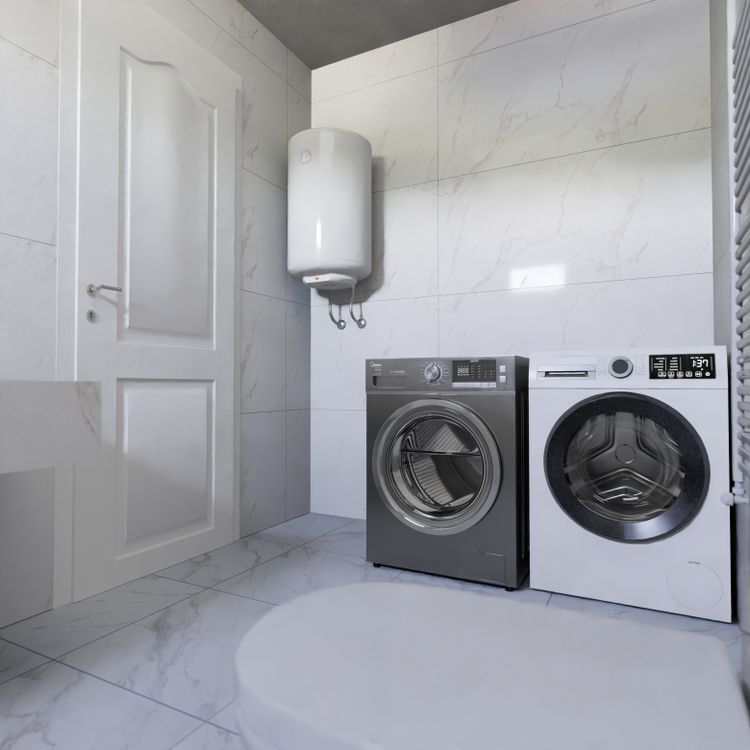
Pans, detectors and shutoff valves, fitted in a short visit.
When a condo heater fails
In a condo, a failed heater rarely stays a private matter. Water spreads along the slab, follows pipe openings and appears in the unit below as a stain or a drip from a light fitting, sometimes hours after the leak began. The person who finds it is often the neighbor below, the office or a relative checking in, not the owner. That's why everyone in a stacked building benefits from a detector in each heater closet, and from the office holding a key for units left empty.
Replacing a condo heater follows the same steps as anywhere: isolate, drain, remove, set, connect, fill, purge and test. The building adds logistics: check-in at the gate or desk, a booked elevator in taller buildings, protected hallways and draining inside the unit. Many associations have their own expectations about water heaters, so ask the office before booking and pass on what they tell you. In closets shared with an air handler, a slimmer or taller model is sometimes needed to keep the clearances both appliances require. A straightforward condo swap is usually a single visit. Replacement is also the natural time to add a drain pan with a working outlet and a leak detector if the closet has neither, and to replace a shutoff valve that no longer closes fully. More on condo water heater replacement.
A smell after the summer
If the hot water smells of rotten eggs after months away while the cold is fine, the cause is commonly associated with a reaction in the still, warm tank involving sulfate in the water and the anode rod. Running the hot taps often clears it. If it returns, a technician confirms the cause and usually fits a less reactive anode; removing the anode altogether would leave the tank unprotected.
A few other things point elsewhere. If the cold water smells too, the gas is already in the supply, which is a question for your water provider. If only one sink or tub smells, its drain may be the source rather than the water. And if the smell arrives together with brown hot water, the anode may be spent and the tank starting to rust, which is worth a technician's look before deciding on a repair.
Water heater services in Boynton Beach
- Leaking Water Heater
- Condo Water Heater Leak
- Condo Water Heater Replacement
- Drain Pan and Overflow Protection
- Seasonal Home Shutoff
A straight swap is usually one visit; condo logistics can add time.
Boynton Beach water heater questions
My Boynton condo sits empty between visits. What's the best setup for the heater?
Close the water supply before each departure, use the heater's vacation setting if it has one, and keep a connected leak detector on the closet floor. A drain pan with a working outlet adds a second layer. On arrival, check around the heater for moisture before the first shower.
For a Boynton Beach home, how does an automatic shutoff valve work?
A sensor sits on the floor by the heater and a motorized valve on the supply. When the sensor gets wet, the valve closes on its own, stopping the leak at its source even if nobody is home. It can protect just the heater or the whole unit.
Are leak detectors worth fitting in a garage?
If the garage adjoins living space or stored belongings, or the home is empty for long spells, yes. A basic alarm is inexpensive, and connected models alert your phone. In condo closets they're worth having as standard, for your neighbors' sake as well as yours.
What should we do with the heater before leaving for the summer?
Shut off the water supply to the home or at least the heater, use the vacation setting if it has one, and fit a connected leak detector. Let the office or a neighbor know you're away. On return, make sure the tank is full before the heater is powered.
Is a drain pan worth adding under an existing heater?
In a closet or above another unit, yes, provided its outlet drains somewhere useful. Fitting one means draining and lifting the heater, so many owners add it at replacement unless the current heater is fairly new and has years left.
What should we check when we get back in the autumn?
Look for moisture, rust or crust around the heater and its pan, make sure the water is on and the tank full before powering it, then run the hot taps for a while. Listen for new rumbling as it heats, and call if anything is wet.
Do you cover west Boynton, Ocean Ridge and the Village of Golf?
Yes. We cover all six Boynton Beach ZIP codes, from Ocean Ridge and Briny Breezes on the coast to the Village of Golf and the unincorporated communities of west Boynton. Tell us your ZIP code and gate arrangements when you call.
Does Boynton Beach's city water leave much scale in heaters?
The city softens its water at treatment, with lime softening at one plant and nanofiltration at the other, which reduces scale compared with untreated supplies. Sediment still collects over the years, so periodic flushing is worthwhile. County-served addresses in the west can differ.
Nearby communities
We also cover Delray Beach, the Lake Worth area and the rest of the Southeast Coast.
Boynton Beach water heater problem?
Call any time for a local pro who works in Boynton's condos, villas and homes.
Closet leaks, garage heaters and empty units.