
Blountstown · Calhoun County
Water Heater Repair and Replacement in Blountstown, FL
Water reaches a Blountstown heater from a public supply in town and from private wells on the rural lots beyond, and either way the older houses and manufactured homes show the wear first, as sediment, a spent anode or a tank standing where it was squeezed in decades ago. This page covers what that means for a repair and when a replacement makes more sense.
All of 32424, from the older streets near the river to the farms and wooded lots outside town.
Water heater repair and replacement in Blountstown
Blountstown became the seat of Calhoun County in 1880, when the courthouse at Abe Springs Bluff burned and the county moved its seat to this growing community on the Apalachicola River. Gulf County was cut from Calhoun County in 1925, which left Blountstown at the center of a smaller, rural county. The ZIP code, 32424, is home to about 8,000 people.
Census data show about 23% of homes in the 1980s, 17% in the 1990s, 15% in the 1960s, 14% in the 1970s, 13% in the 1950s and 8% in the 1940s, with around 3% older than the 1940s and 8% built since 2000. Manufactured homes make up a large share of the housing, with the heater in a compartment or a closet, while frame and block houses keep it in a utility room, a porch closet or a garage. Expect mostly electric heaters, plus some gas or propane ones.
Few homes sit empty part of the year; about 2.9% are seasonal by Census count, so most heaters run every day. Water comes from a mix of public supply and private wells, and the minerals and sand in it settle in a tank as sediment over the years. Winter brings noticeably cooler water into the heater as well, which is why a tank can seem fine in August and short in January.
For repair work, the spread of ages matters. The houses of the 1950s and 1960s are often on their third or fourth heater, with the tank in a spot chosen long ago, while the homes of the 1980s and 1990s are reaching the end of their first or second. Tell us the type of home, where the heater is, whether you're on a well and what it stands on, and the technician can arrive with the right parts or a plan for a replacement that fits the space.
We connect callers in Blountstown with local water heater pros across ZIP code 32424.
Where heaters ended up
Many of the older houses went up before heaters were routine, so each one since has gone wherever it could fit: a closet off the kitchen, a back porch, a corner of the laundry or a room added later. A closet cut for an old, short tank may not take a taller one, a porch exposes the fittings to damp, and an addition may have a thin floor. At replacement, ask whether the spot still suits, and renew the pan, valves and connectors with the tank. More on water heater replacement.
Raised floors and old piping
Where a house stands on piers, with a wood floor above a crawl space, a leak seeps through the boards and does its harm beneath, unseen, so a stain on the floor means the damage is well advanced. Old pipe near the heater may be crusted, and a shutoff that hasn't turned in decades can refuse to close. A pan whose outlet reaches the outside is worth more here than in a house on a slab. Related: drain pan and overflow protection.

Hot water fading on cold mornings? A pro can test the heater and say whether size is behind it.
Gas and propane heaters
Where natural gas or propane reaches a home, a gas tank is an option at replacement, and it recovers quickly when winter water arrives cold. It burns fuel beneath the tank and sends exhaust up a vent, so the burner, the controls and the venting are work for a technician qualified for gas appliances. A home with no supply uses an electric tank. If you smell gas at any point, get everyone out and call your gas utility and 911 from outside. Learn more about gas water heater service.
Cooler winter water
In a Panhandle January the water reaching the heater, from a well or a public line, is much colder than in July. Each gallon takes longer to heat and the tank recovers more slowly, so a heater that kept up all summer can run out of hot water on a busy morning. A failed lower element or heavy sediment gives the same symptom, so test the heater before assuming it is too small. Pick a replacement that copes with the coldest busy morning. More on water heater not heating enough.
Heaters outside the house
Some Blountstown heaters live outdoors: in a carport closet, behind a louvered door or, for a tankless unit, on an exterior wall. The fittings there meet rain, damp and insects, and corrode faster than indoors. An outdoor-rated tankless unit is designed for the exposure, while a tank in a closet needs a weatherproof enclosure. At replacement the installer checks the location suits the heater and renews valves and connectors that are crusted.
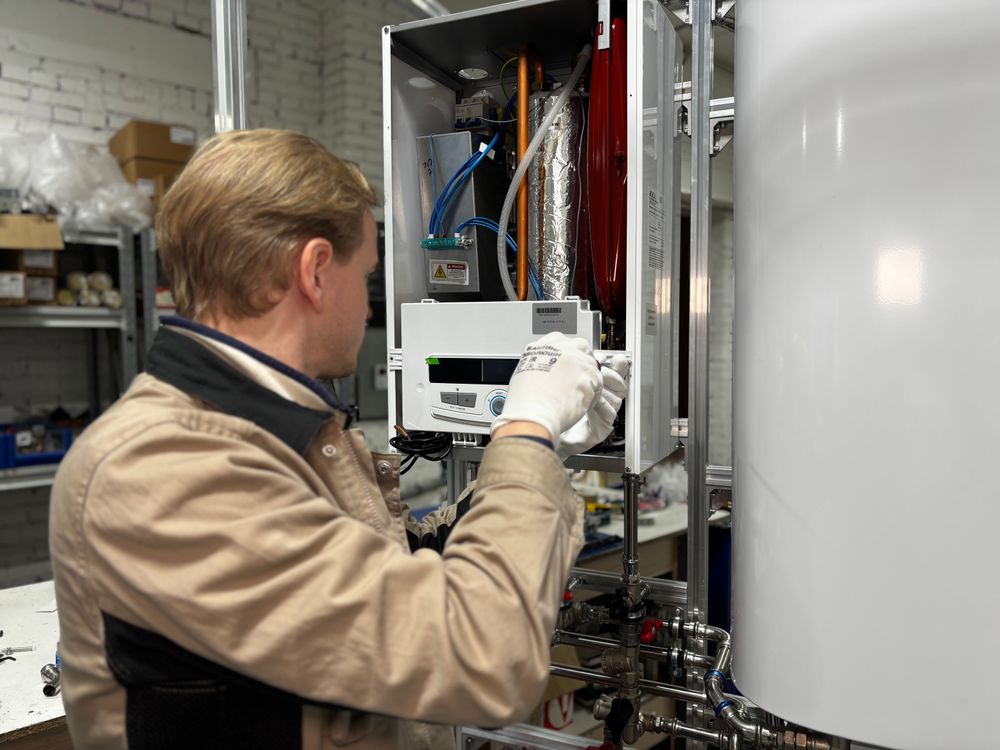
Tank in its second decade? A pro can inspect the anode and judge whether the steel is still worth protecting.
Wells and sediment
Homes on private wells draw groundwater carrying dissolved minerals, fine sand and sometimes iron, which settle on the tank floor faster than from a public supply. They bury the lower element, make the tank rumble and wear out the anode early. Flushing early, checking the anode every few years and a sediment filter on the well line all help. Water treatment is a separate specialism. Related: water heater repair.
Compartment heaters
In a manufactured home the heater sits in a slim compartment or closet made for it, so a replacement has to fit the space as well as the household. Heaters designed for manufactured housing are generally what's needed. Describe the compartment when you call, with the door size if you know it, and look at the floor beside it now and then, since a leak in a compartment can run unseen. See water heaters in manufactured homes.
Electric faults in plain terms
No hot water at all usually means the upper element, its thermostat or the high-limit cutoff, while hot water that fades after a few minutes points to the lower element, often under sediment. A breaker that trips again and again suggests a shorted element and should be reported, not reset. With live wiring behind every cover, the safe move is to describe the symptom and let a pro test it. Learn more about electric water heater repair.
Dating the heater
The rating label lists the model, the capacity and a serial number that most makers use to code the year and month or week of manufacture, in a pattern that varies by brand. Send a photo of the rating label or read the serial out, and the technician can usually work out its age in advance. A tank beyond its tenth or twelfth year that rusts, rumbles or runs short is better replaced on your schedule than the heater's.
Water heater services in Blountstown
- Gas Water Heater Service
- Water Heater Not Heating Enough
- Electric Water Heater Repair
- Manufactured Home Water Heaters
- Drain Pan and Overflow Protection
Blountstown water heater questions
For a Blountstown home, what should I do if I smell gas near the water heater?
Get out of the building at once and call your gas utility and 911 from outside; that is the only step for you to take. After the utility has cleared the home for use, a technician qualified for gas appliances can inspect the water heater and explain what they find.
In Blountstown, are gas water heaters common here?
That depends on whether natural gas reaches your street. Across most of Florida it doesn't, so electric heaters dominate. Where gas is piped, gas tanks and tankless units are common, and propane is used in some rural homes. The installer can confirm what is available at yours.
In Blountstown, why do we run out of hot water in winter but not in summer?
The water entering the heater is much colder in winter, so it must be raised further and delivers fewer gallons in a busy hour. If the heater tests well, it may be sized for summer. Sediment or a failing element in an old tank can add to the shortfall.
For a Blountstown home, is a hissing or sizzling sound a problem?
On an electric heater, sizzling can come from scale on the elements or water dripping onto hot parts. On a gas heater it can be condensation on the burner. A hiss near the relief valve may mean it is discharging. Any of these deserves a look, especially with moisture around the heater.
For a Blountstown home, does a manufactured home need a special water heater?
Generally, yes. Heaters designed for manufactured housing suit the compartments and connection layouts of these homes. Say that it's a manufactured home when you call, and whether the heater is reached from outside, so the technician brings a suitable model.
For a Blountstown home, what information helps when I call?
Your ZIP code, whether the heater is electric, gas, tankless or heat pump, where it sits, what you've noticed and when it started, and roughly how old it is if you know. Access details, such as a gate code or directions from the main road, help too.
Should the heater go back in the same spot at replacement?
Usually, because it's the simplest option. But if the spot is awkward, cramped or exposed, ask the installer to price a move against a replacement in place. A move needs new water lines, a drain for the relief valve and sometimes changes to the space.
Do you cover all of Blountstown?
Yes. We cover the whole 32424 ZIP code, from the older streets near the river to the farms and wooded lots outside town. Give us your address and directions from the main road on the call, and we'll match you with a nearby pro who works in Calhoun County.
Nearby communities
We also cover Bristol, Sneads, Chattahoochee and the rest of the Panhandle.
Blountstown water heater repair?
Call any time for a local pro who repairs and replaces heaters across Blountstown's older houses and manufactured homes.
Closets, porches and compartments across 32424.