
St. Augustine · St. Johns County
Water Heater Repair and Replacement in St. Augustine, FL
Our St. Augustine callers range from owners of century-old houses near the plaza to condo owners on Anastasia Island, families in the new subdivisions out west and managers of vacation rentals. Each needs something different, and the heater's age is where every conversation starts. For repair or replacement in St. Augustine, call and we'll connect you with a local pro.
Historic district, the island and the western communities, all five ZIP codes.
Water heater repair and replacement in St. Augustine
Pedro Menéndez de Avilés founded St. Augustine on September 8, 1565, making it the oldest continuously inhabited European-established settlement in the contiguous United States. The five ZIP codes that carry its name today reach far beyond the colonial streets: across the Matanzas River to Anastasia Island and St. Augustine Beach, west toward the World Golf Village area and north toward Palm Valley, with about 110,000 people across them.
Census figures show how recent most of that growth is. About 36% of homes date from the 2000s, 17% from the 1990s and 22% from the 1980s, with 11% from the 1970s and around 13% older, including historic houses near downtown. The installations vary as widely as the homes. In the oldest houses, the heater sits in a closet, a back room or a converted porch, often somewhere found long after the house was built. On the island, condos keep it in an interior closet beside the air handler, sometimes above another unit, while beach cottages use a garage or utility room. In the western subdivisions and golf communities, it's nearly always in an attached garage. Most heaters are electric, though some homes have gas.
The City of St. Augustine draws its water from eight wells, most in the Floridan Aquifer, and treats it with reverse osmosis at its own plant; homes outside the city are served by other utilities. About 9% of homes are held for seasonal or occasional use, according to Census data, and some are let as vacation rentals. Like the rest of North Florida, the area has a real cool season, when water reaches heaters much colder than in summer. So a heater call here can mean anything from a tight closet in a house more than a century old to a builder tank in a garage that's barely twenty years old.
Our St. Augustine coverage runs through ZIP codes 32080, 32084, 32086, 32092 and 32095.
Three eras, three heater histories
The historic core. Houses near the plaza and the older neighborhoods have seen many heaters come and go, each fitted wherever space allowed and connected to whatever the last one left. The tank itself is often modern; the valves, connectors and floor around it may not be. Replacement means draining in place, carrying the tank through the house and sometimes choosing a slimmer or taller model to fit the space.
The island and the 1970s and 1980s. Many condos and homes on Anastasia Island date from these decades and are now on their second or third heater, with fittings that have spent decades in salt air. In a condo, a failure can reach the unit below within the hour, so pans and leak detectors matter more here than anywhere else in the city.
The western subdivisions. Homes from the late 1990s and 2000s, including golf and gated communities, often still have their original builder heater, now old enough that failures come in clusters on a street. Builders usually fitted the same model throughout a phase, so one neighbor's replacement is a good prompt to read your own label, and installation is a chance to reconsider size or move to a heat pump unit.
Reading the label
The house's age says little about the heater's. The reliable guide is the rating label on the tank, which lists the model, capacity and serial number. Most manufacturers code the manufacture date into the serial number, usually as a year plus a month or week, in a pattern that varies by brand. Read it out when you call, or send a photo if the heater is squeezed into a closet, and the technician can decode it before arriving. The label also gives the first-hour rating, which matters if you're thinking of a different size at installation.
Signs a heater is near the end
Rusty or brown hot water while the cold stays clear, rust or a mineral trail at the base of the tank, crusted fittings on top, and popping or rumbling that has grown louder all point to a heater approaching the end. So does hot water that runs out noticeably sooner, though a single failed part can do that too. Water from the tank body or its bottom seam means the steel has rusted through; close the cold supply valve and call the same day. The other signs mean plan a replacement now, on your own schedule rather than the tank's, and with time to choose the right size. See water heater replacement.
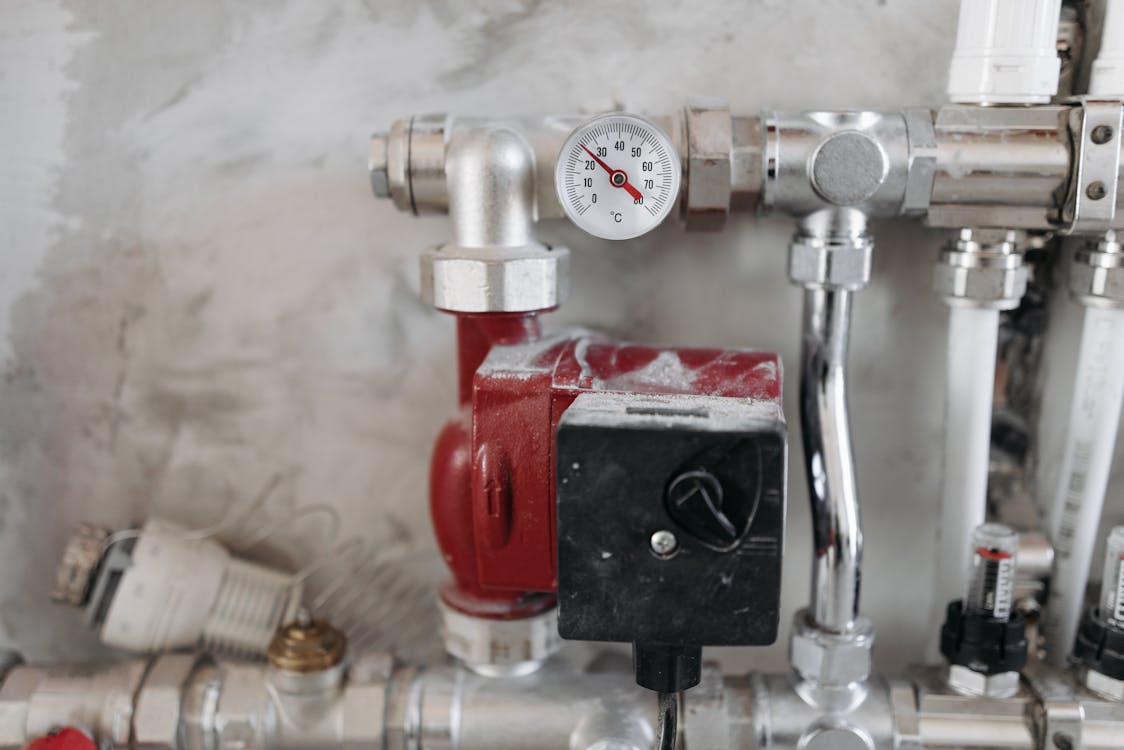
Close the cold valve above the heater and keep clear of the wiring, then call.
Salt air on the island and the bayfront
On Anastasia Island, along the bayfront and near the inlet, salt carried on the breeze settles on the metal around a heater. Brass and copper fittings grow a green crust, braided connectors corrode at their crimped ends and steel nipples rust, and any of these can start a slow weep that leaves a mineral trail down the tank, easily mistaken for the tank failing. Heaters in garages and utility rooms open to the breeze corrode fastest. A look at the connections every few months catches most of it, and at installation it pays to renew corroded parts rather than reconnect to them. Details are in leaking water heater.
Colder water in winter
From December to February, water reaches the heater much colder than in summer, so each gallon takes longer to heat and a tank that was fine in July can run short in January. Before choosing a bigger heater, have the current one checked for a failed lower element or broken dip tube, which cause the same symptom. At installation, the installer sizes a tank by its first-hour rating against your busiest winter hour, and a tankless unit for the coldest mornings. More on water heater not heating enough.
A sulfur smell from the hot taps
Hot water that smells of rotten eggs while the cold is fine is commonly associated with a reaction in the tank involving sulfate in the water and the anode rod, and it's most familiar after a house or condo has stood empty. A technician confirms the cause on site and usually fits a less reactive anode, often with a flush. Removing the anode is never the answer, because the tank loses its protection against rust. Learn more about rotten-egg smell in hot water.

Water heater services in St. Augustine
- Water Heater Installation
- Condo Water Heater Replacement
- Leaking Water Heater
- Water Heater Not Heating Enough
- Heat Pump Water Heater Installation
- Rotten-Egg Smell in Hot Water
Tell us about the closet and the building, and the visit will be planned around them.
Nearby communities
We also cover Hastings, St. Johns, Palm Coast and the rest of North Florida.
St. Augustine water heater questions
Will a heat pump heater keep working in our garage through a St. Augustine winter?
Yes. On the coldest mornings it draws less warmth from the garage air and uses its built-in elements more, so it's less efficient for those hours. The long warm season more than makes up for it. It needs a roomy garage rather than a condo closet.
In St. Augustine, how is an old heater taken out of an upper-floor condo?
The technician drains it completely inside the unit, disconnects it and carries it out on a dolly, usually by service elevator, with hallway floors protected. Booking the elevator with the building office in advance keeps the visit short and avoids a wasted trip.
How will the technician get into our gated community?
With your help. Tell us how entry works when you call, whether by code, guest pass or call box, and whether someone will be home. Putting the visit on the gate's guest list beforehand saves waiting at the entrance and keeps the visit short.
For a St. Augustine home, why does the hot water smell after the house has been empty?
Water that sits in a warm tank for weeks gives the smell-causing reaction time to build up. Flushing the lines by running hot water for a while generally helps. If it keeps returning, a technician can confirm the cause and fit a less reactive anode rod.
Does a call outside business hours cost more?
It can, depending on the local pro and the time. You'll be given the price before any work starts, so you can decide whether to go ahead now or book a daytime visit. A leak usually can't wait; a heater that's merely lukewarm often can.
Can a heat pump water heater go in our condo closet?
Usually not in a small enclosed closet, because heat pump units need a good volume of air around them and somewhere for condensate to drain. Louvered doors or ducting can sometimes help. They suit a garage in one of the western subdivisions far better.
Our house in the historic district has the heater in a back room. Can the new one go there?
Usually, yes. The installer checks the space, the floor beneath and the route out, and may suggest a slimmer or taller tank. It's a good moment to add a drain pan with a proper outlet and renew the shutoff valve, which is often much older than the tank.
Do you cover St. Augustine Beach and the western communities?
Yes. We cover all five ZIP codes: 32080, 32084, 32086, 32092 and 32095, from the historic district and Anastasia Island to the subdivisions and golf communities to the west. Give us your address when you ring, and we'll put you through to a local pro.
St. Augustine water heater installation?
Call any time for a local pro who installs and replaces heaters in St. Augustine's historic homes, condos and subdivisions.
Old houses and new ones, island and mainland.