
Jacksonville Beach · Duval County
Water Heater Repair and Replacement in Jacksonville Beach, FL
The Jacksonville Beach call we hear most: a heater in a condo closet or the utility room of a beach cottage has started to leak, and someone, often a neighbor or a landlord, needs it stopped and replaced. Here's what to do first, and what the replacement involves. If it's a repair or a full replacement, a local Jacksonville Beach pro can look at it.
Oceanfront to the Intracoastal, all of 32250.
The first hour of a leak
If it's your heater. Close the valve on the cold pipe above the heater, or the main shutoff for the unit or house if that valve won't turn. Keep clear of the heater's electrical parts, and on a gas heater, don't touch any controls. Put towels at the closet door and move anything stored nearby. In a condo, tell the office and the neighbor below straight away.
If water is coming from upstairs. Call the association or management office so staff can reach the unit above and shut its water off. Keep clear of wet light fittings, move belongings, take photographs and contact your own insurer.
If you let the property. Tenants should call you or your manager; get the supply closed, then arrange the visit. Where water has reached another unit, each owner contacts their own insurer. Then note where the water came from: a fitting, the relief valve or the drain valve can usually be repaired, while water from the tank body means replacement. More on condo water heater leak.
Water heater repair and replacement in Jacksonville Beach
The settlement here was first named Ruby, after the daughter of the Scull family who lived there. On May 13, 1886, it was renamed Pablo Beach after the San Pablo River, and the railway that arrived that year brought the first resort hotel. The boardwalk era began around 1915. Pablo Beach was incorporated in May 1907 and took the name Jacksonville Beach in 1925. Its single ZIP code, 32250, is home to about 25,400 people between the ocean and the Intracoastal Waterway.
The housing spans the whole twentieth century. Census numbers place about 12% of homes in the 1950s, 14% in the 1960s, 17% in the 1970s, 18% in the 1980s, 16% in the 1990s and 18% in the 2000s. Near the ocean there are beach cottages and older block homes, where the heater may sit in a utility room, a laundry closet or a converted porch, alongside condominiums and townhomes with the heater in an interior closet near the air handler. Farther west, single-family homes keep it in the garage. Most heaters are electric, though natural gas reaches some streets.
Only about 4.9% of homes are held for seasonal or occasional use, according to Census data, and many calls come from landlords, managers and neighbors as well as owners. Because the housing went up steadily over half a century, heater ages vary widely from one street to the next, and many homes are on their third or fourth heater, often connected to valves and fittings left from earlier installations. Salt air corrodes fittings on heaters near the ocean, especially in cottages and garages left open to the breeze, and a crusted connector can weep for weeks unnoticed. And like the rest of North Florida, the beaches get a real cool season, with much colder water reaching heaters in winter.
Service in Jacksonville Beach covers ZIP code 32250.
Closet heaters and how they're replaced
A condo or townhome heater usually stands in a closet built around it, sharing space with the air handler and sometimes above another home. Three details decide how much a leak costs: a drain pan with an outlet piped somewhere that can take the water, a relief valve discharge line that ends where released water does no harm, and a shutoff valve that turns freely and that everyone can find. A connected leak detector on the closet floor adds early warning, and an automatic shutoff valve can close the supply by itself. In a building where units stand empty between tenants, those two additions do the most good.
Replacing a closet heater follows the same steps as anywhere: isolate, drain inside the unit, remove, set, connect, fill and test. The building adds a check-in, protected hallways and, in taller buildings, a booked service elevator. Closets were often built around a particular tank, so the installer measures first and may suggest a slimmer or taller model. Many associations have expectations of their own, so ask the office before booking and pass on what you learn when you call. Read more at condo water heater replacement.
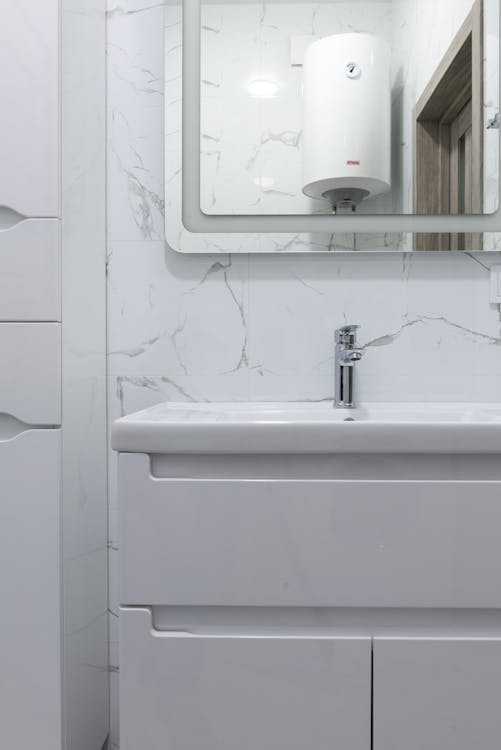
Tell us about the closet and the building, and the swap will be planned around them.
Gas heaters where the mains reach
Natural gas reaches some Jacksonville Beach streets, and where it does, a gas tank or tankless heater recovers quickly, which helps on cold winter mornings. Every gas heater relies on a vent that carries its exhaust outside, a correctly sized supply line and enough combustion air, and all three are checked at each service and replacement. In an older cottage the vent route may be awkward, and a replacement is the moment to have it checked from end to end. Near the ocean, the gas connections and vent corrode like any other metal, so they deserve a look at each visit. If you smell gas, leave the building and call your gas utility and 911 from outside. Related: gas water heater service.
Colder water in winter
From December to February, water arrives at the heater much colder, so each gallon takes longer to heat and the tank recovers more slowly. A heater that was fine in summer can leave the last shower lukewarm in January. Rule out a fault first, such as a failed lower element or broken dip tube, since either mimics an undersized heater. If the heater tests fine, choose a replacement with a higher first-hour rating, a faster-recovering model, or gas where it's available, within what the closet allows. In a garage in the western neighborhoods there's usually room to go up a size, and tankless units need sizing for the coldest mornings too. Details are in water heater not heating enough.
A sulfur smell from the hot taps
Hot water that smells of rotten eggs while the cold is fine is commonly associated with a reaction in the tank involving sulfate in the water and the anode rod, often after a unit has stood empty between tenants. Running the hot taps for several minutes may clear it; if not, a technician confirms the cause and usually fits a less reactive anode. Removing the anode is never the answer, because the tank loses its protection against rust. Read more at rotten-egg smell in hot water.
Water heater services in Jacksonville Beach
- Condo Water Heater Leak
- Condo Water Heater Replacement
- Drain Pan and Overflow Protection
- Gas Water Heater Service
- Water Heater Not Heating Enough
- Rotten-Egg Smell in Hot Water
Between tenants or before winter, a look at the tank, fittings and anode.
Jacksonville Beach water heater questions
What kinds of water heaters do you see most here?
Mostly electric tanks: in condo and townhome closets, cottage utility rooms and the garages of the western neighborhoods. Where gas reaches the street, gas tanks and tankless units are an option too, and heat pump units are increasingly chosen at replacement for roomy garages.
Can a heat pump heater cope with a cold garage in January?
Yes. On chilly mornings it draws less warmth from the air and uses its backup elements more, so it's less efficient for those hours. Over the year the warm months carry it. It needs a roomy garage with a drain for condensate rather than a condo closet.
I own several rentals at the beach. How do I keep heaters under control?
Keep a record of each property's heater type, location and manufacture date, and show tenants the shutoff. Fit a connected leak detector by every heater so alerts reach you. Replace heaters well into their second decade between tenancies rather than waiting for a mid-lease failure.
Water is coming through our ceiling from the unit above. What do we do?
Ring the association or management office at once so staff can get into the unit above and turn its water off. Keep clear of wet light fittings, move what you can, photograph the damage and contact your own insurer about it.
Why is there green crust on the fittings on top of our heater?
It's corrosion on copper and brass, which the salty, humid air near the ocean speeds up. The crust often covers a slow weep at the joint. Replacing crusted connectors and valves before they fail is far cheaper than dealing with the leak they eventually cause.
How does calling you work?
You call, give us your ZIP code and describe what's happening, and we connect you with a local pro who works at the beaches. They'll confirm the details, arrange a visit and price the work before starting. Landlords and managers can call on a tenant's behalf.
Our 1950s beach cottage has the heater on an enclosed porch. Can the new one go there?
Usually, yes. The installer checks the space, the floor beneath and the route out, and may suggest a slimmer or taller tank. Near the ocean, it's worth renewing the shutoff valve and connectors at the same time, and adding a pan with a working outlet.
Do you cover the whole of Jacksonville Beach?
Yes. We cover all of 32250, from the oceanfront condos and cottages to the neighborhoods along the Intracoastal. Give us your address, and any building check-in details, on the call, and we'll match you with a nearby pro who works nearby.
Nearby communities
We also cover Neptune Beach, Atlantic Beach, Ponte Vedra Beach and the rest of North Florida.
Jacksonville Beach water heater replacement?
Call any time for a local pro who replaces heaters in Jacksonville Beach's condos, cottages and homes.
Owners, landlords and neighbors below.