
Zolfo Springs · Hardee County
Water Heater Repair and Replacement in Zolfo Springs, FL
Water heater work in Zolfo Springs differs from most of Florida in one respect that has little to do with the weather: a great many homes are manufactured, most are on private wells, and a smell on the hot tap is the complaint that sends owners looking for help. Sorting out where the smell starts is the first job, and often the whole answer. For repair or replacement in Zolfo Springs, call and we'll connect you with a local pro.
All of 33890, from the streets near the river to the lots and rural roads around town.
Does the smell come from the heater?
A pair of glasses settles it. If only the hot water smells, the heater is the likely source and a heater technician can examine it. If both smell, the odor arrives with the water, and on a private well that points to the well, its pump or its filter, which is a job for a water specialist. Say which it was, and when it is strongest, when you call. Details are in rotten-egg smell in hot water.
What goes on inside the tank
A smell on the hot side alone is commonly associated with a reaction inside the tank. Sulfate in the water and bacteria that like warm, still conditions can react with the anode rod, the metal rod that corrodes so the steel doesn't, and the resulting gas is what you smell. It builds fastest when water has stood unused, such as after weeks away. A technician confirms the cause on site and usually fits a less reactive anode, sometimes with a flush.
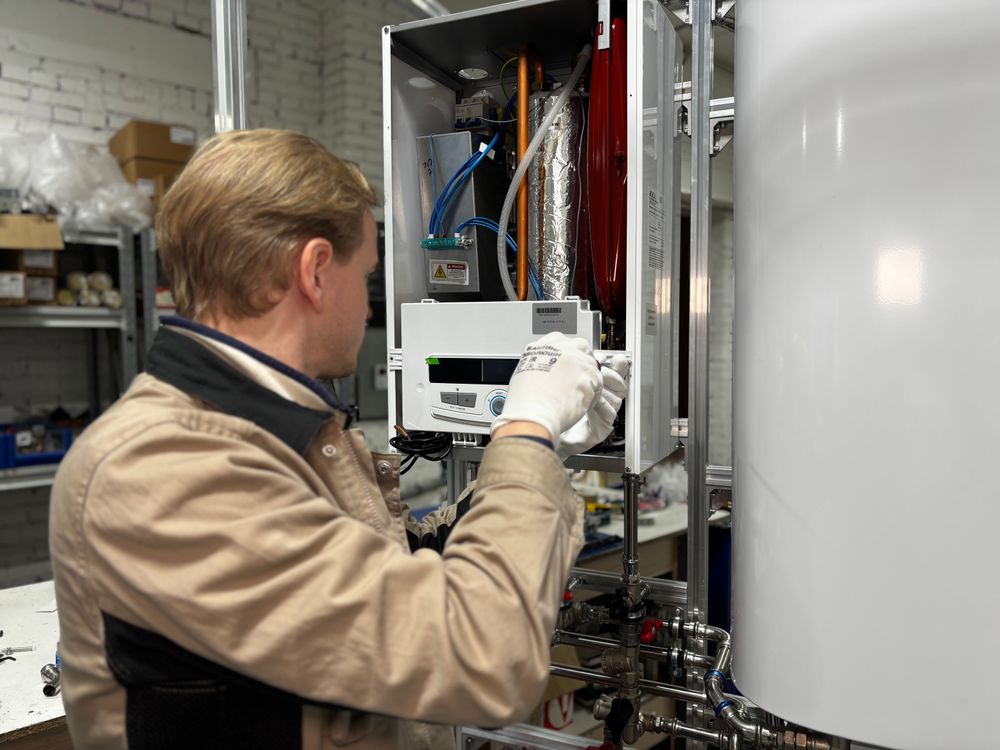
Told the tank has to go? A pro can look at it and say whether a repair or a new anode would do.
Water heater repair and replacement in Zolfo Springs
The settlement beside the Peace River dates from about the late 1870s and 1880s. The Florida Southern Railroad opened a depot here in 1886 and a post office followed on May 26 of that year. The town was incorporated in 1904, first under the name Zolfo, and took the name Zolfo Springs on September 13, 1909. Its ZIP code, 33890, is home to about 5,100 people, in a small river town and across the ranch and grove country around it.
The Census tallies about 27% of homes in the 1990s, 18% in the 1970s, 15% in the 2000s, 14% in the 1960s and 12% in the 1980s, with around 14% from the 1950s or earlier. Manufactured homes make up a large share of the housing, with the heater in a compartment or a closet, while frame and block houses keep it in a utility room, a porch closet or a garage. Electric is by far the usual fuel for heaters here.
About 5.8% of homes are seasonal, according to Census data, so most heaters work every day while some stand idle for part of the year. Private wells supply most homes, and a heater that works every day gathers sediment steadily, so age and use together decide how much life a tank has left.
For repair work, the housing spans seven decades, so heater ages vary widely. The tank in a 1960s home may be on its third or fourth, while one in a 1990s home is likely on its first or second. Mention the type of home, where the heater sits and whether you have a well, and the technician can bring the right parts. Reading the serial number off the label lets us date the heater before the visit, and a call before the old tank fails lets a repair or a replacement be planned calmly instead of on the day the hot water stops.
Calls from Zolfo Springs are matched to installers covering 33890.
What a well does to a heater
A private well sends groundwater straight into the heater, with the minerals, fine sand and sometimes iron it carries. These settle on the tank floor faster than they would from a public supply, burying the lower element, making the tank rumble as it heats and wearing the anode away sooner. Swings in pump pressure can set the relief valve dripping. Early flushes, anode checks and a sediment filter on the well line all help a tank last. Read more at water heater flushing and maintenance.
The anode rod
The anode is a cheap part that does a lot for the tank. While it lasts, it takes the corrosion; once it is spent, rust moves on to the steel. On well water it wears faster, so a heater past its middle years benefits from a check. The fitting is often seized and the tank must be isolated first, so leave removal to a technician, and never take the rod out to cure a smell, since the tank then rusts through much sooner. Learn more about anode rod replacement.
Heater past ten years on well water? A pro can inspect the anode and judge how long the tank has left.
Coming back to a closed home
If the home has stood empty, look at the heater, the pan and the floor before the water goes back on. If anything is wet, keep the supply closed and call. If all is dry, restore the water and let the tank fill completely before the heater runs, because an element heating an empty tank burns out almost at once. Run the hot taps until the water flows smoothly, and watch the floor for a few days. A sulfur smell after a long absence often clears once the taps have run for a while.
Compartments and the right model
In a manufactured home the heater sits in a slim compartment, often reached through an outside panel, and a replacement has to fit it. Heaters designed for manufactured housing are generally what's needed. Describe how yours is reached and read out the model on the old label when you call. More on water heaters in manufactured homes.
Telling where a leak starts
Water from a fitting on top, the relief valve or its pipe, or the drain valve usually means a part that can be renewed. Water through the tank body or its bottom seam, rust at the base or a mineral streak down the side means the tank itself has failed and needs replacing. Close the cold supply, keep clear of the wiring and call, and the technician traces the source before suggesting anything.
Reading the heater's age
Somewhere on the rating label is a serial number, and most makers code the year and the month or week of manufacture into it, in a pattern that differs from brand to brand. A photograph is enough for the technician to date the heater before the visit. On well water a tank often ages faster than the calendar says, so one in its second decade that rumbles, rusts or runs short is usually better replaced than repaired.
Floors, pans and early warning
Flooring in many manufactured homes marks and softens quickly when wet, and a leak in a shut compartment can run unseen for weeks. A drain pan with a connected outlet catches the first drip, and a sensor on the floor beside the tank raises the alarm. Look at the base of the heater now and then and call early.
Water heater services in Zolfo Springs
- Rotten-Egg Smell in Hot Water
- Anode Rod Replacement
- Flushing and Maintenance
- Manufactured Home Water Heaters
- Seasonal Home Shutoff
Zolfo Springs water heater questions
Why might my replacement cost more than a neighbor's in Zolfo Springs?
Mostly because of access and what the old installation needs. A heater in a tight compartment takes longer than one in an open garage, and a home that needs new connectors, a shutoff valve, a pan or an expansion tank costs a little more. A different size or type changes the price too.
Can the water heater be moved to a different spot in Zolfo Springs?
In many cases, yes, but a move brings new water lines, a fresh circuit or gas line and vent, a relief-valve drain and sometimes changes to the space, and each adds to the price. The installer can quote a move next to a replacement in the same spot.
How do technicians usually deal with a sulfur smell from the heater in Zolfo Springs?
Typically by replacing the anode with a less reactive type, such as aluminum-zinc, or with a powered anode that isn't consumed, often along with a flush. The right choice depends on the water and the heater, so the technician confirms the cause first.
How can I tell whether the tank itself is leaking in Zolfo Springs?
Water from the tank body or the bottom seam, rust at the base and a mineral trail down the side point to the tank. Water from a fitting on top, the relief valve or the drain valve usually means a replaceable part. Dry the area and watch where moisture returns.
Do you cover the whole ZIP code?
Yes. We connect callers across all of 33890, whatever kind of home or heater you have. Give us your address and directions from the main road when you call, and we'll pass you to a local pro who works in Hardee County.
Is it worth repairing a heater more than twelve years old in Zolfo Springs?
Only if the fault is small and the tank is dry and clean. At that age a tank leak is likelier within a year or two, so many owners choose to replace rather than repair twice. Seeing both prices side by side makes the choice straightforward.
What should I note down before I call?
The make and age from the rating label if you can read it, where the heater sits, what you have noticed and when it began, and whether the home is on a well. Add any gate details, and the pro can prepare the right parts and plan the visit.
Does the smell mean the heater is failing?
Not by itself. A hot-side smell is commonly associated with the anode and the water, and a new anode often deals with it. A technician checks the tank at the same time, and if the steel is sound the heater can carry on for years.
Nearby communities
We also cover Wauchula, Fort Meade, Avon Park and the rest of Central Florida.
Zolfo Springs water heater repair?
Call any time for a local pro who repairs and replaces heaters across Zolfo Springs, in houses and manufactured homes alike.
Compartments, closets and garages across 33890.