
Frostproof · Polk County
Water Heater Repair and Replacement in Frostproof, FL
Water reaches a Frostproof heater from a public supply in town and from private wells beyond it, and that one difference decides how fast sediment builds in the tank. Add the homes that stand empty for part of the year, and a heater here tends to fail in one of two ways: slowly under daily use, or quietly while nobody is home. Repair or replacement, Frostproof callers are connected with a local pro.
All of 33843, from the streets around the lakes to the groves and country roads beyond town.
Water heater repair and replacement in Frostproof
The ground here saw a short-lived army post in 1850, but the first permanent settlers came in the 1880s as homesteaders. The town was briefly called Keystone City before it took its present name, and it was incorporated in 1921, with an economy built on the citrus groves that surround the town. It sits in the southeast of Polk County among lakes and groves, and its ZIP code, 33843, is home to about 11,100 people.
By Census count, about 22% of homes in the 1980s, 20% in the 1990s, 16% in the 2000s, 15% in the 1960s and 11% in the 1970s, with around 15% from the 1950s or earlier. Manufactured homes make up a large share of the housing, with the heater in a compartment or a closet, while frame and block houses keep it in a garage, a utility room or a carport closet. Electric tanks make up most of the heaters.
About 19.2% of homes are held for seasonal or occasional use, according to Census data, among the higher shares in the county, so many heaters stand idle for months. Water comes from a mix of public supply and private wells. A heater that works every day gathers sediment steadily, so age and use together decide how much life a tank has left.
For repair work, the two patterns call for different thinking. A heater in a lived-in home usually fails from wear: an element, a thermostat, a valve or an anode used up. A heater in an empty home fails from neglect, most often a leak found late. Tell us whether the home is lived in all year, where the heater is and whether you're on a well, and the technician can arrive with the right parts for your home, your water, the time of year and whether anyone is living there.
Calls from Frostproof are matched to installers covering 33843.
Before you leave for the season
If you head away when the weather turns warm, make the heater part of closing up. Close its cold supply valve, or the main shutoff, so a connector that gives way can't run all summer. Use the heater's vacation setting if it has one, or ask a technician how best to leave yours. Look at the compartment or closet for damp and crust, and have anything doubtful put right first. A connected leak sensor on the floor, and a neighbor with a key, are cheap insurance against a long absence. More on seasonal home water heater shutoff.
The empty months
In a manufactured home the heater compartment is a corner nobody opens, and a slow leak there can soak the floor for weeks. A pan with an outlet to the outside carries the first water away, and a sensor tells you and your key holder the moment it gets wet. Whoever checks the home should look beneath the compartment and at the ground beside it, as well as in the rooms.
Pick a date, and a pro will confirm the tank, the fittings and how long the visit will last.
Coming back after months away
Open the compartment and look for moisture, rust or a mineral trail before the water goes back on. If anything is wet, leave the supply closed and call. If all is dry, restore the water and let the tank fill completely before the heater runs. Run a hot tap until it flows smoothly, and watch the floor for a few days. A rotten-egg smell on the hot side after a long absence is commonly associated with the anode rod and often clears once the taps have run for a while.
What a well does to a tank
A private well sends groundwater straight into the heater, with whatever minerals, fine sand and iron it holds. These settle on the tank floor sooner than they would from a public supply, burying the lower element, making the tank rumble and wearing out the anode faster. Pump pressure can also set the relief valve dripping. Flushing early, checking the anode every few years and adding a sediment filter on the well line all help. Read more at water heater flushing and maintenance.
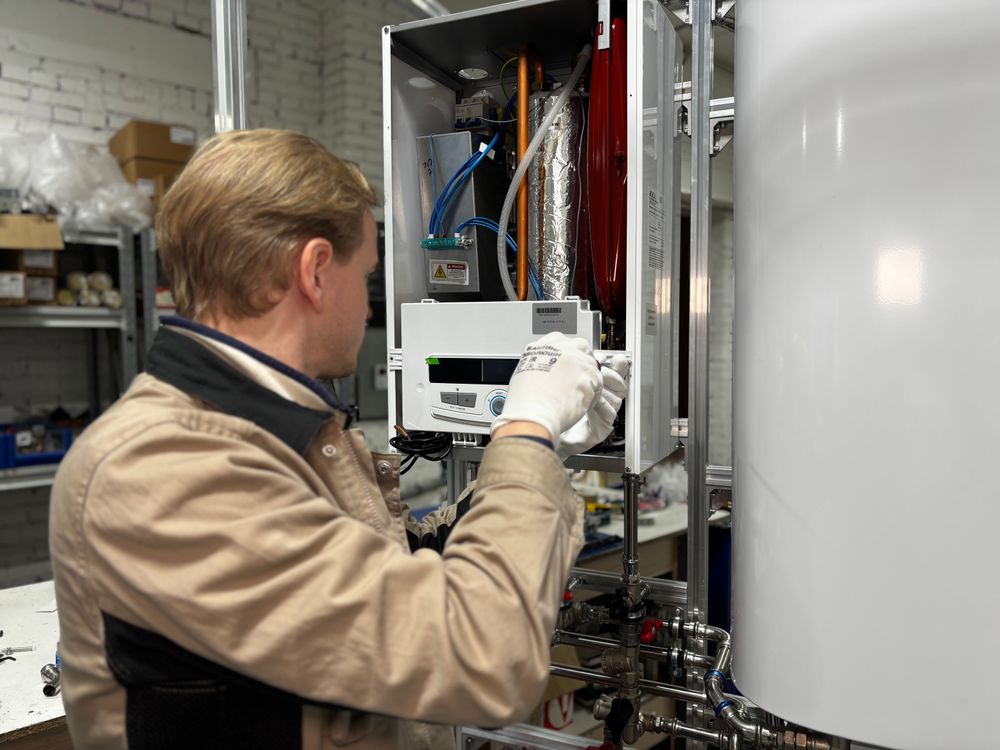
Brown or orange water from the hot tap only? A pro can tell you whether the tank or the pipes are to blame.
When the breaker trips
A breaker that trips when the heater tries to run usually means a shorted element, and one that trips right after a long absence may mean the element heated before the tank was full. Resetting it again and again won't bring a burned element back, so leave it off and report it. A heater that stops heating with the breaker still on points to a thermostat or the high-limit cutoff. See no hot water diagnosis.
Electric faults in plain terms
No hot water usually means the upper element, its thermostat or a tripped high-limit cutoff, while water that fades after a few minutes points to the lower element, often under sediment. Water far hotter than normal means a thermostat stuck on. None of this is a do-it-yourself job; the wiring is live, so report the symptom and leave the diagnosis to the pro. More on electric water heater repair.
Heaters in manufactured homes
A manufactured home usually keeps its heater in a slim compartment or closet, often reached through a panel in an outside wall. The tank is made for that space, and heaters designed for manufactured housing are generally what's needed, so a replacement has to fit the compartment as well as the household. Describe the compartment when you call, with the door size if you know it, and check that the panel closes firmly. More on water heaters in manufactured homes.
Reading the heater's age
The rating label on the tank lists the model, the capacity and a serial number that most makers use to code the year and the month or week of manufacture. Photograph it or read it out, and the technician can usually date the heater before arriving. On well water a tank often ages faster than the calendar says, so a heater in its second decade that rumbles, rusts or runs short is usually better replaced than repaired.
What a repair or replacement visit involves
The technician finds the fault first. A failed element, thermostat or valve is replaced on a sound tank; a tank leaking from its body is a replacement. For a replacement the water is shut off, the old tank is drained and removed, and the new one is set with fresh valves and connectors and filled completely before the power returns. Clearing a path to the heater is all the household needs to do.
Water heater services in Frostproof
- Manufactured Home Water Heaters
- Seasonal Home Shutoff
- Electric Water Heater Repair
- Flushing and Maintenance
- No Hot Water Diagnosis
- Leaking Water Heater
Frostproof water heater questions
For a Frostproof home, why is a leak worse in a manufactured home?
Floors in many manufactured homes are made of materials that suffer quickly when wet, and a leak in a compartment can go unnoticed for a long time. A pan with a working outlet and a leak sensor are worth having, particularly where the home is empty for part of the year.
In Frostproof, what should I check when I come back after months away?
Look around the heater for moisture, rust or a mineral trail before using it. Make sure the water is back on and the tank is full before the heater gets power. Run the hot taps for a while and listen for new rumbling as it heats.
Does a water softener help the heater?
It greatly reduces the minerals behind scale and sediment, so flushing may be needed less often. Softened water tends to use up the anode sooner, though, so the rod still needs checking. A technician can advise on both during a visit.
Can a heater stay in a carport or outdoor closet?
Many do in Florida. The fittings meet more humidity and corrode faster, and the enclosure has to keep the weather off the heater. At replacement the installer checks that the heater suits the location and whether the valves and connections should be renewed.
In Frostproof, can a manufactured-home heater be repaired, or must it be replaced?
Often a repair is enough: failed elements and thermostats can be changed like those on any electric heater. A tank that is leaking or rusting needs replacing with a model designed for manufactured housing. The technician checks and prices both routes.
For a Frostproof home, what should I do with the heater before leaving for the summer?
Many owners close the water supply to the home or the heater, use the heater's vacation setting if it has one and fit a connected leak sensor. Some have a technician set up the heater for the absence. Leave a key with someone who can look in.
Can someone look at the heater while I'm away?
Yes, if you give us access details and a contact who can let the technician in. We'll connect you with a local pro to arrange the visit, and you can approve any work by phone before it starts, wherever you are.
Do you cover all of Frostproof?
Yes. We cover the whole 33843 ZIP code, from the streets around the lakes to the groves and country roads beyond town. Give us your address and directions from the main road at the start of the call, and we'll connect you with a local technician who works in Polk County.
Nearby communities
We also cover Lake Wales, Avon Park, Fort Meade and the rest of Central Florida.
Frostproof water heater repair?
Call any time for a local pro who repairs and replaces heaters across Frostproof, in houses and manufactured homes alike.
Compartments, closets and garages across 33843.